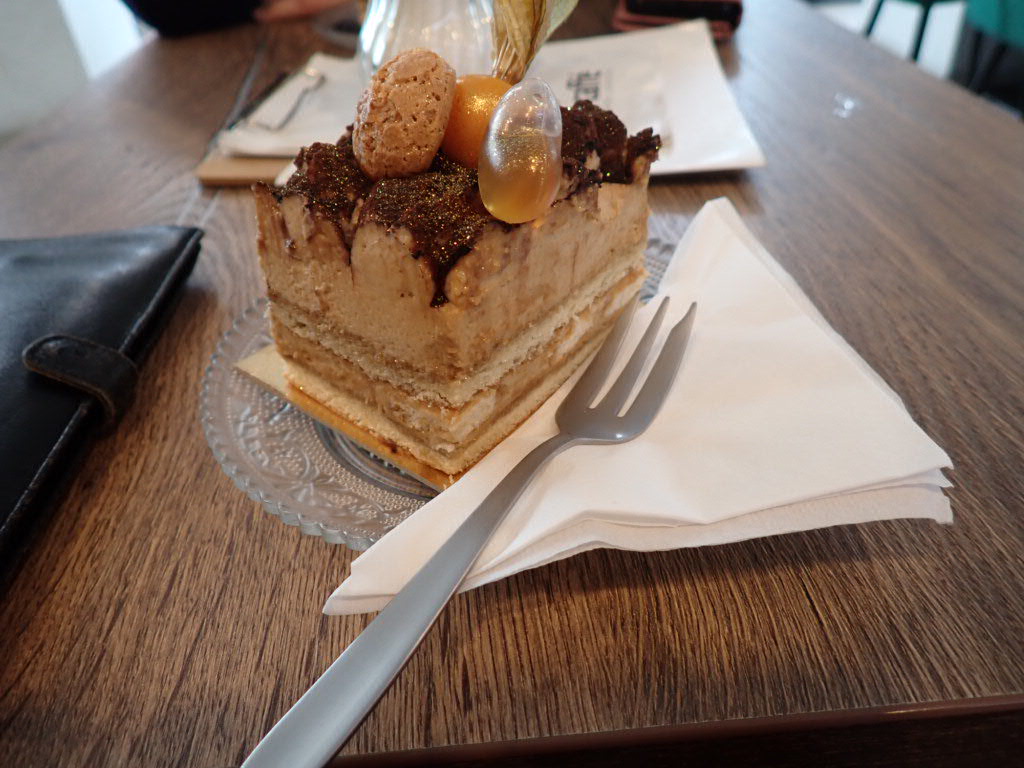
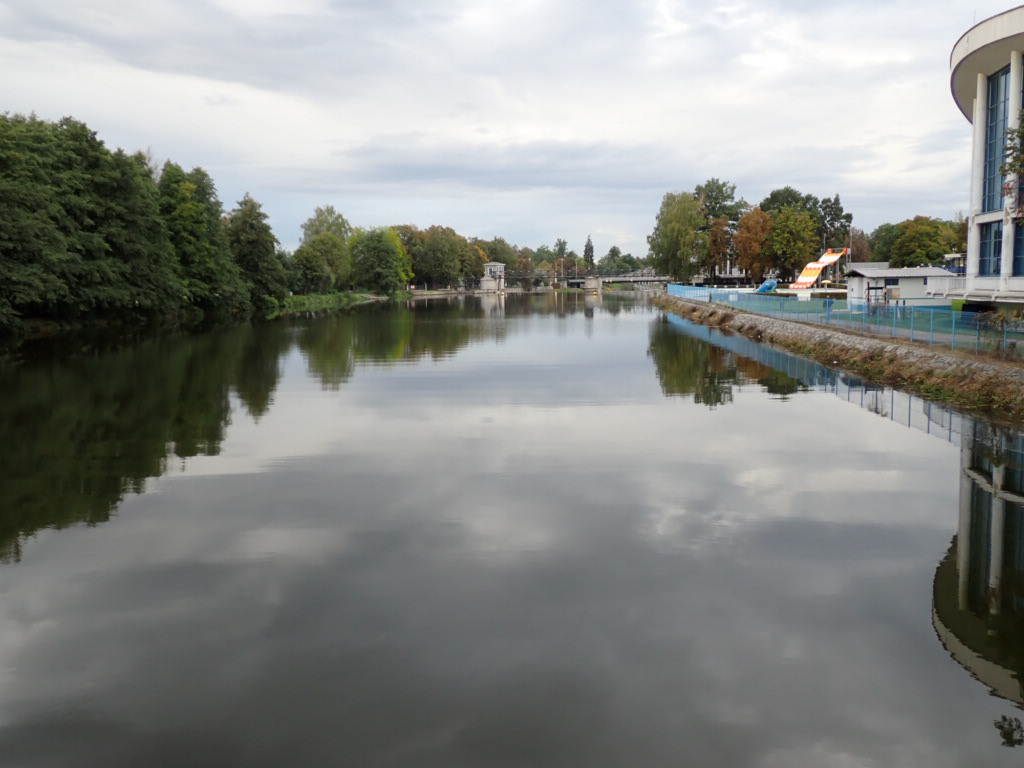
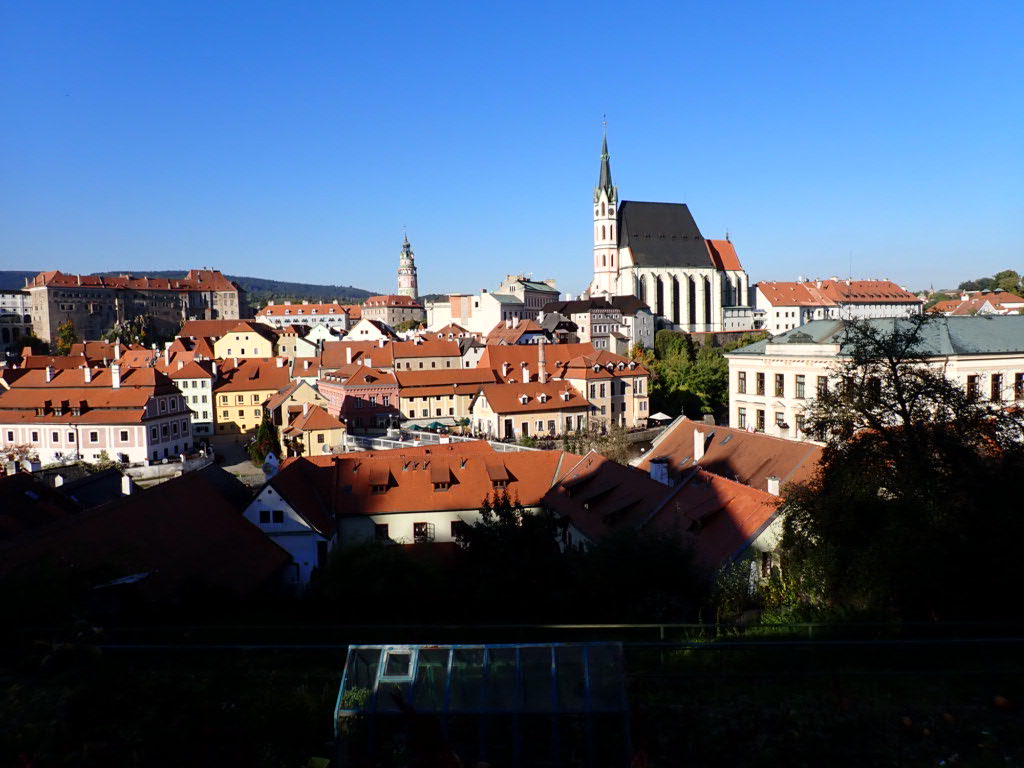
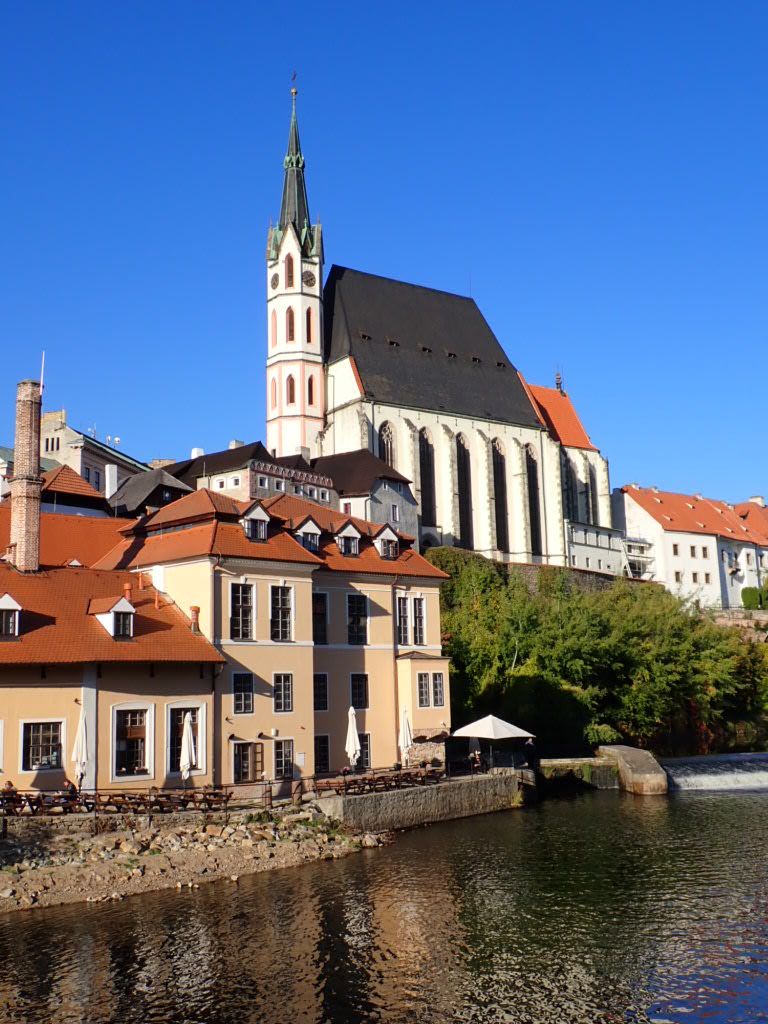
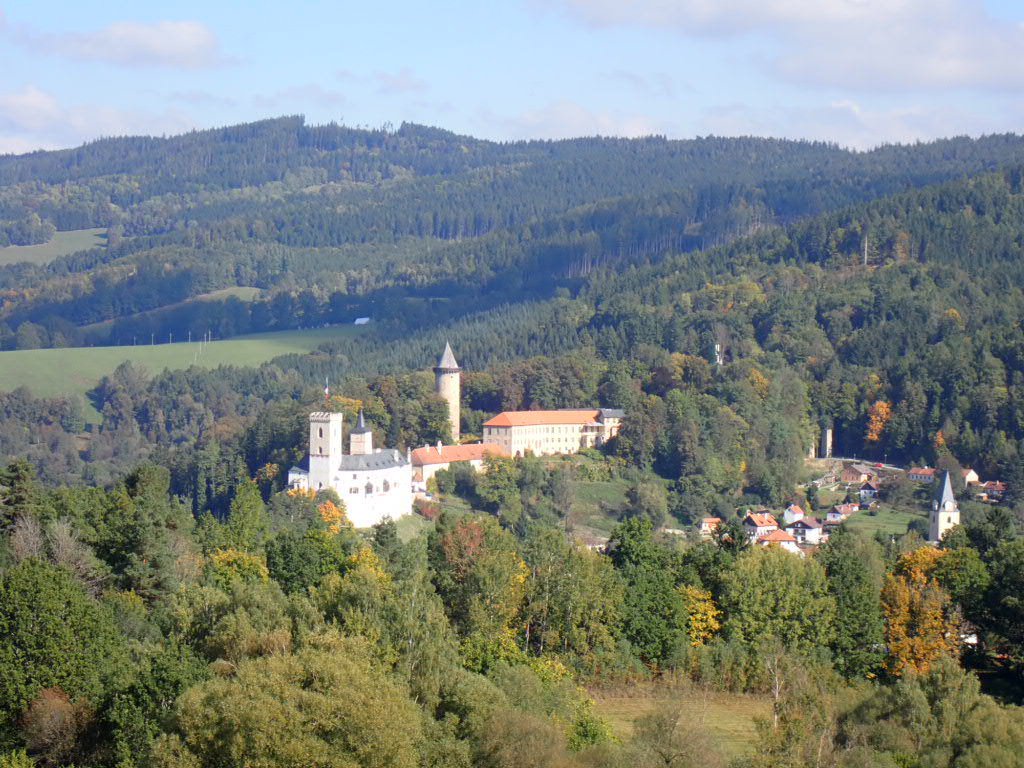
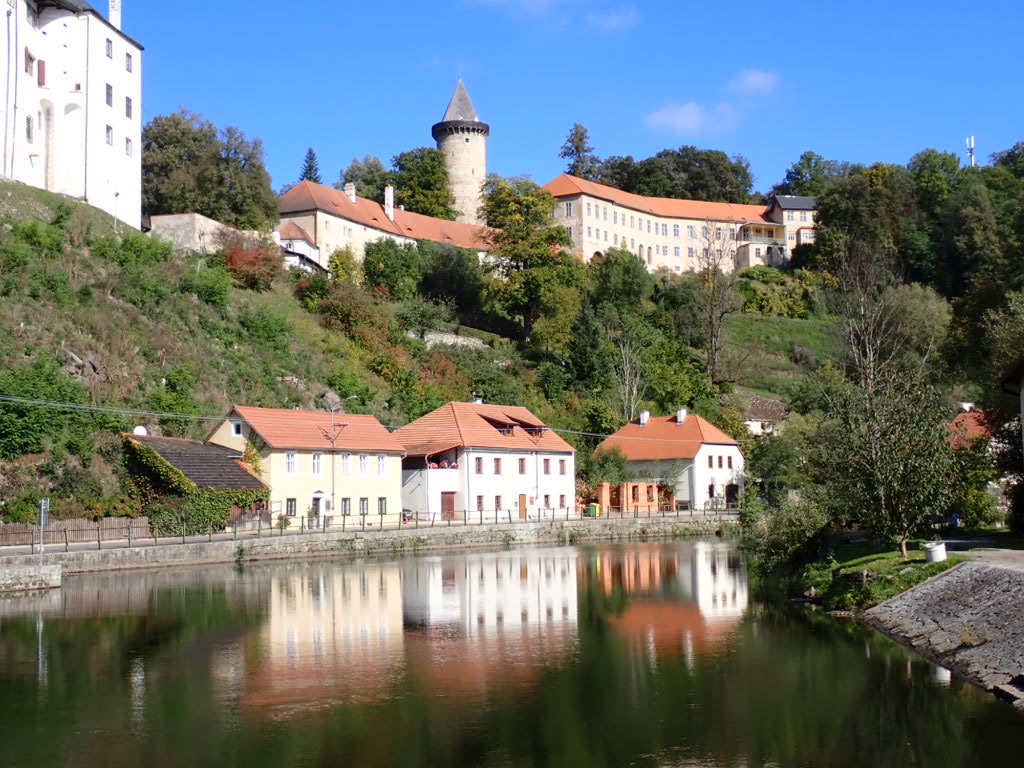
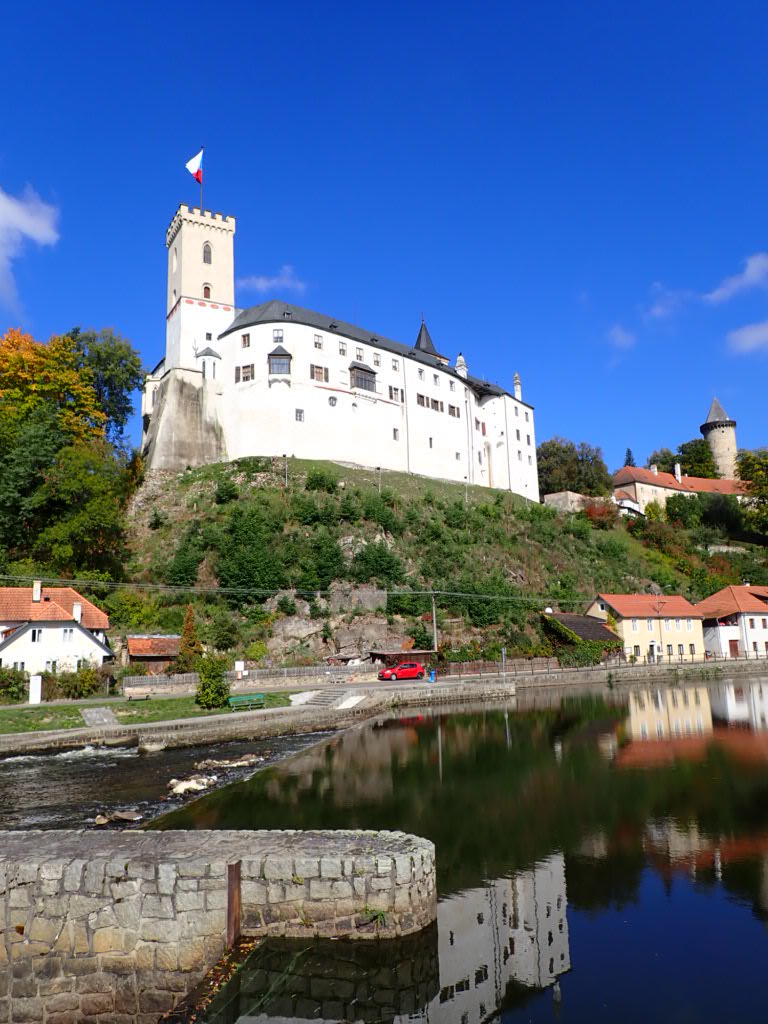
Having had no lunch and feeling cold and a little hard done by, I determined that a cup of tea and something ridiculous was in order to celebrate our last day in the Czech Republic, when we arrived in Ceske Budejovice. This absolutely fitted the bill. Any complaints from the keeper of the purse were easily squashed by my reasoning that I had not had one beer the whole trip (no hardship there). This hazelnut tiramisu had little plastic hearts that acted as a pipette that, when squeezed, doused the cake with alcohol. They have been smuggled into my luggage to make it home.
The next priority was finding the river. The city was the one place that I had already visited in 2003, but I was coming down with flu. I can only really remember not feeling like eating my tea, the main square and a nice wool shop.
The Vltava seemed placid and just plain ordinary. It is wide and calm at this point and I just hear the main theme of the music- not the majeatic pomp or peasant folk music of other parts of the work. Our walk through the city was a little complicated by a big event that we really did not understand but seemed to culminate in a night run. Everyone in the city looked like they were about to compete, or just had.
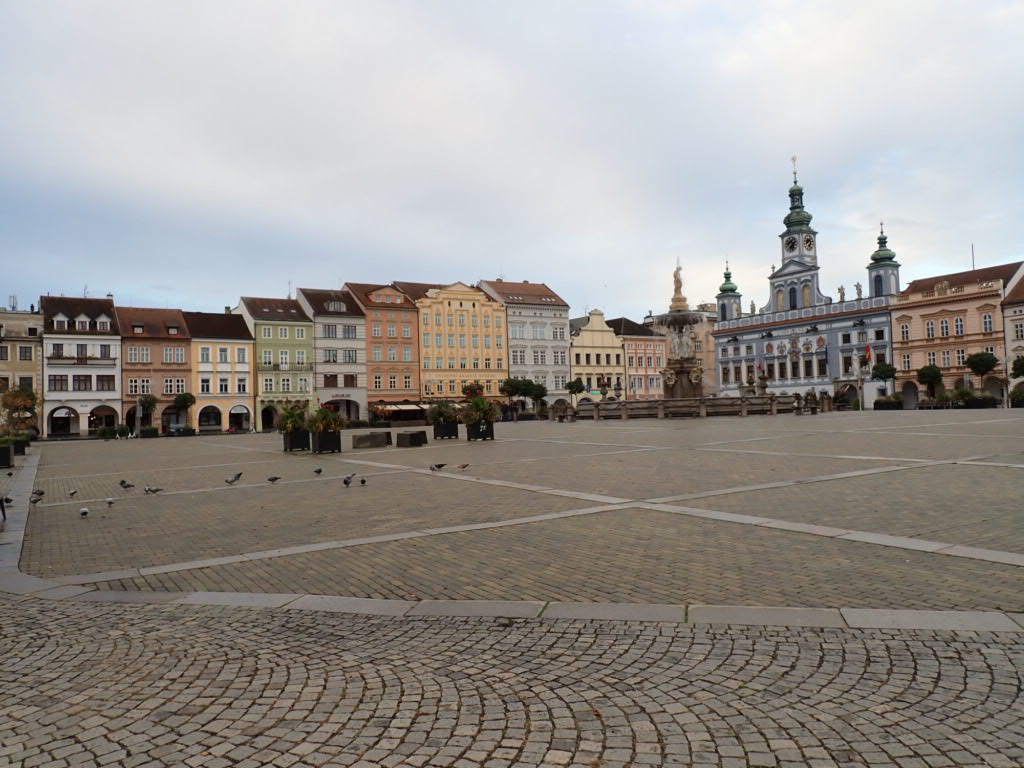
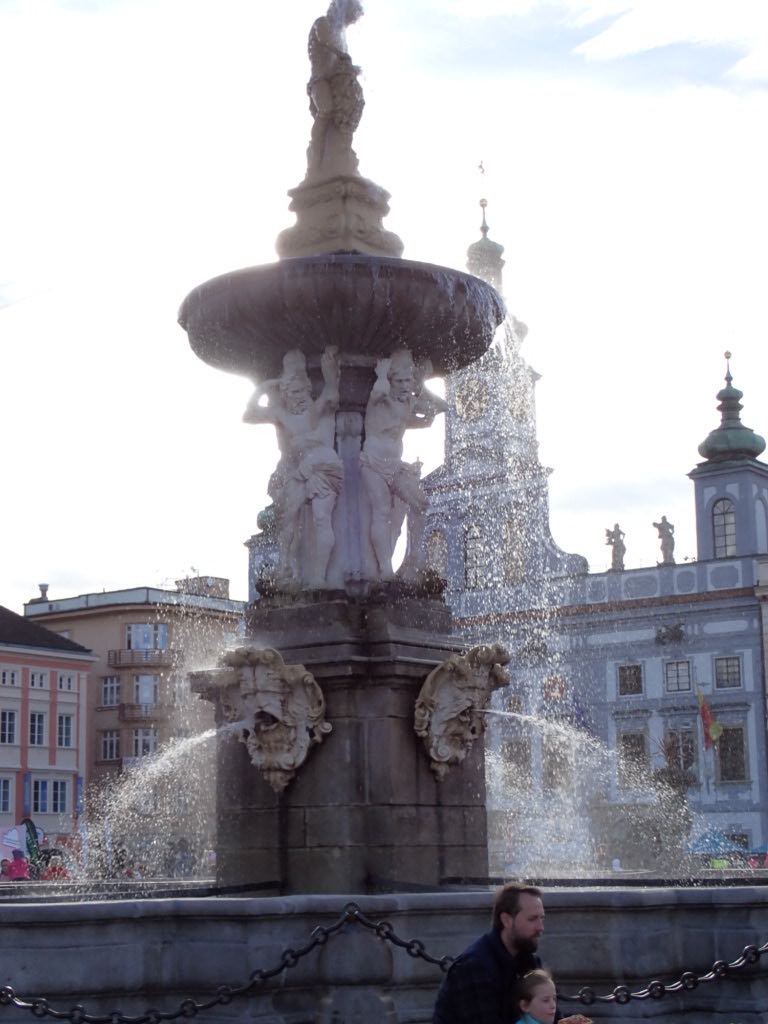
The main square is a real example of how to maximise a ciy’s assets – in the UK it would probably be a glorified car park but here it is a vast space to be used for public events or just space to circulate and enjoy with the Samson Fountain in the centre. The photo of the deserted square was at 7.30am Sunday as we made our way to the station to start the journey home.
Rob really worked so hard to make this trip happen. I am all in favour of travel by public transport and have spent all my life travelling this way, but writing this on the journey home as we have battled rail replacement buses, German railways struggling to keep to time and resulting in tight connections, it is so useful to have a companion who can tell you that if you get off at Frankfurt Flughafen you will be on the same platform and not have to lug the folded up bike up and down stairs yet again. Thanks Rob for the fun, putting up with my grumps and taking care of anything that I didn’t want to! And thanks for those of you that have followed these travels. I turned comments off as knew I wouldn’t have time to respond but hope you enjoyed the ride.
So far a feature of the journey has been ghost villages and towns. We have often gone without food (that apple picked from the hedgerow was so sour) and occasonally ran out of water as there hasve been few shops, cafes or pubs open along the way. There are some advantages of going in between the summer season and the ski season as we benefitted from cheap accommodation – and saved money on food! On the Brompton bikes, with so little luggage space, it is not possible to stock up. I really think the region would be much improved by the availability of a cup of tea and a scone at about 3.30pm.
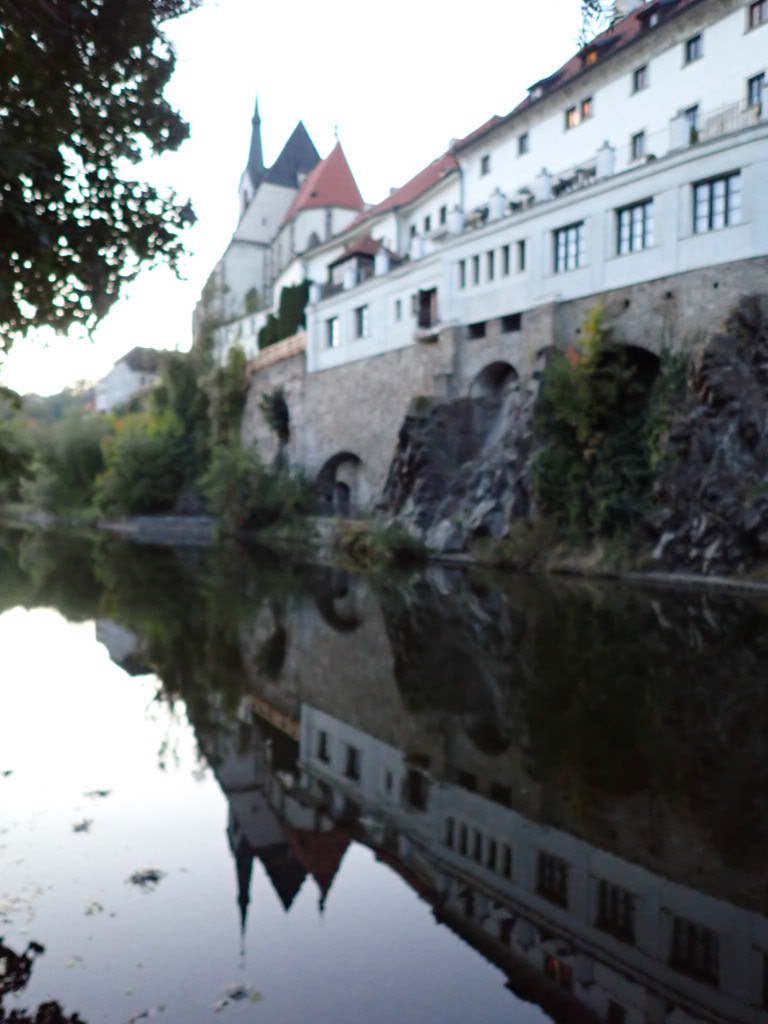
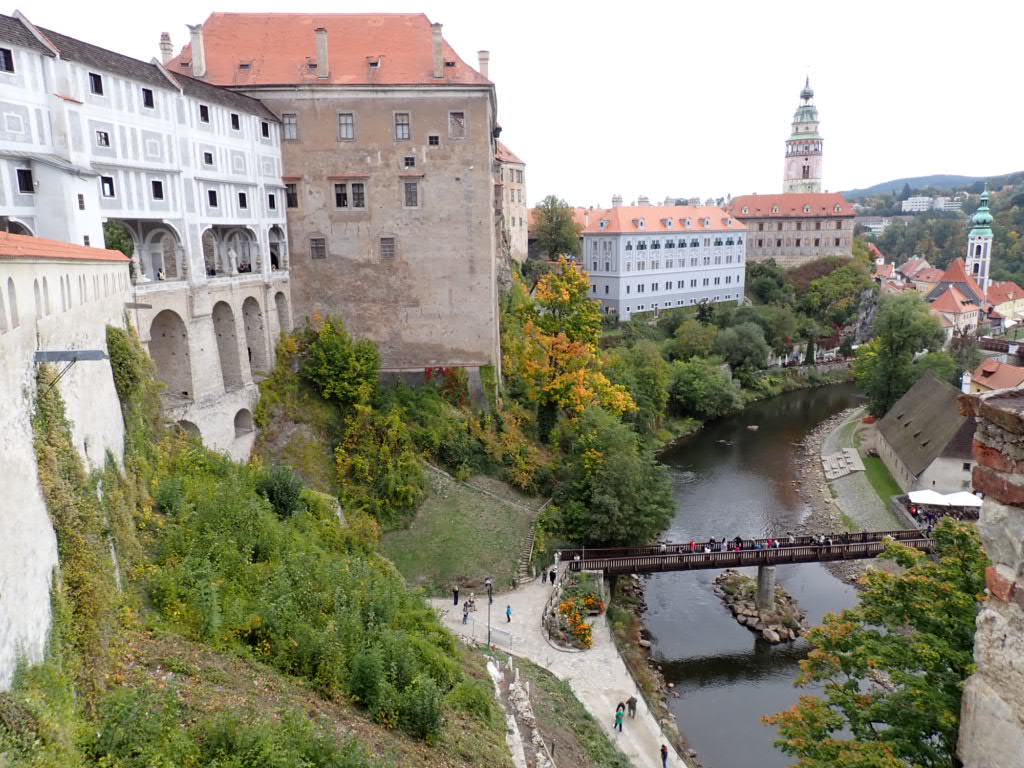
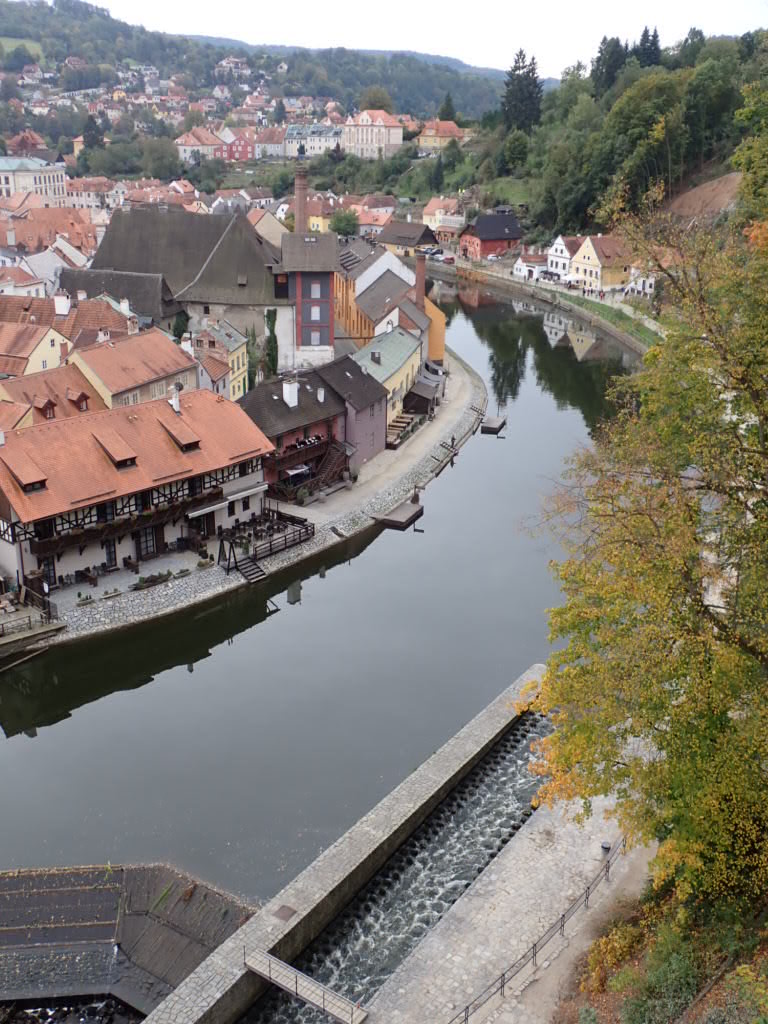
But this all changed at Cesky Krumlov. Catapulted into the third most popular honeymoon destination for Chinese couples outside China (why does my husband have statistics like this in his head?) The place was heaving. The Vltava meanders through the city and the architecture is incredible, so well worth a visit.
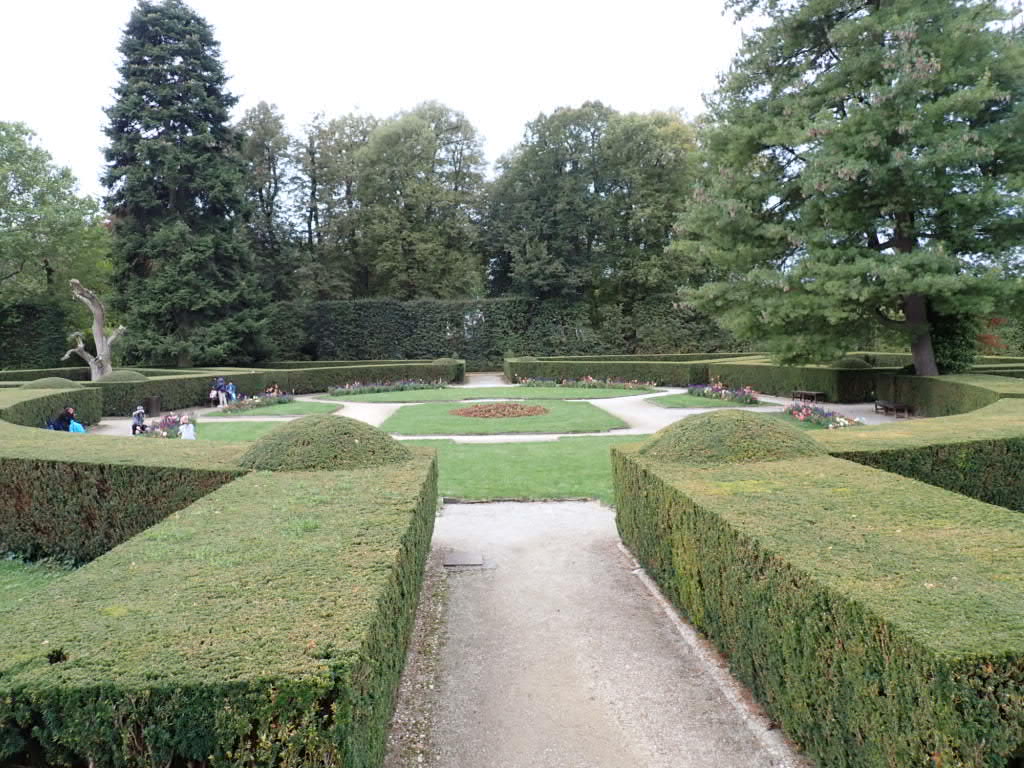
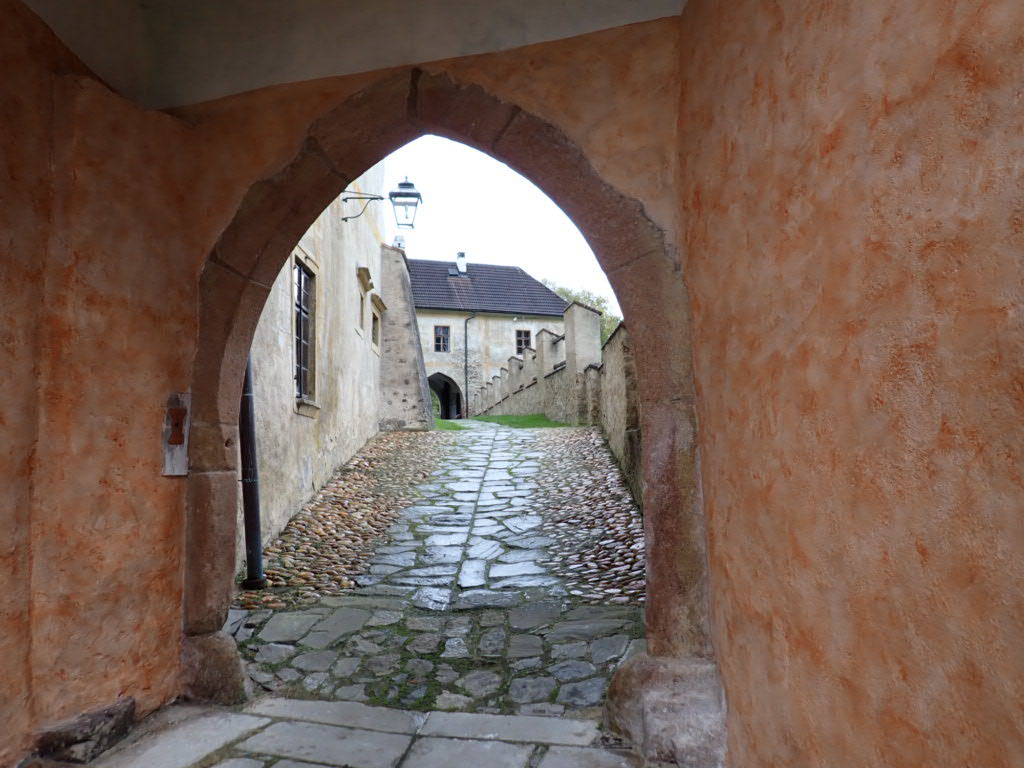
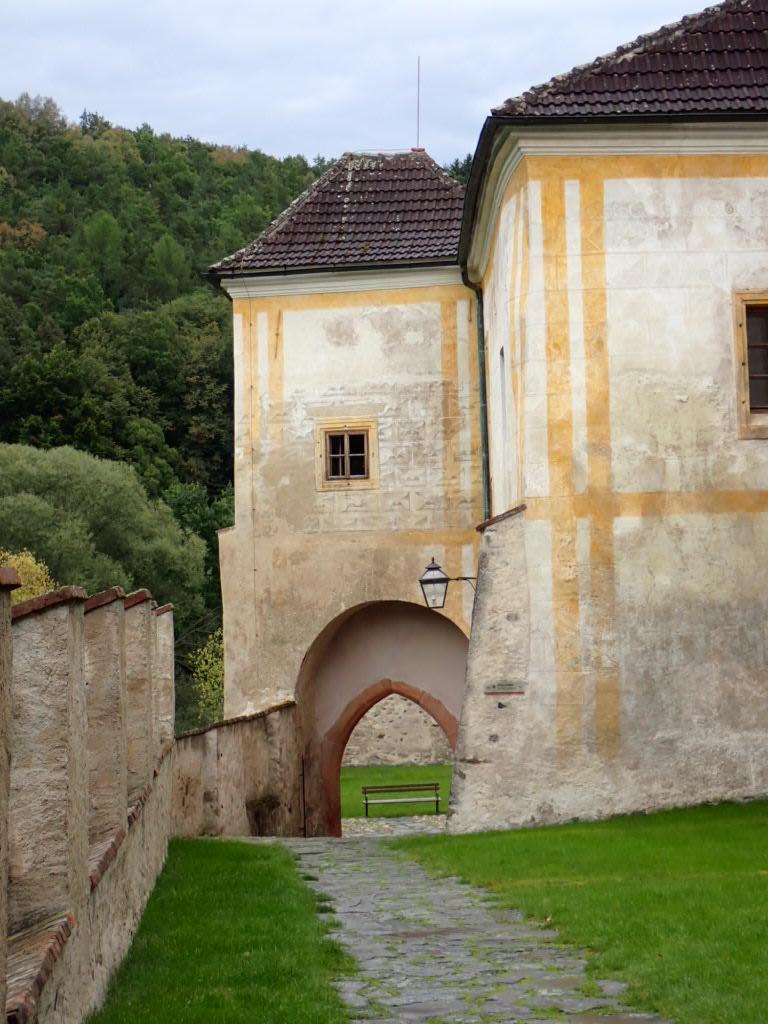
In the morning we did the touristy bit climbing up very steep paths to the castle and formal gardens.
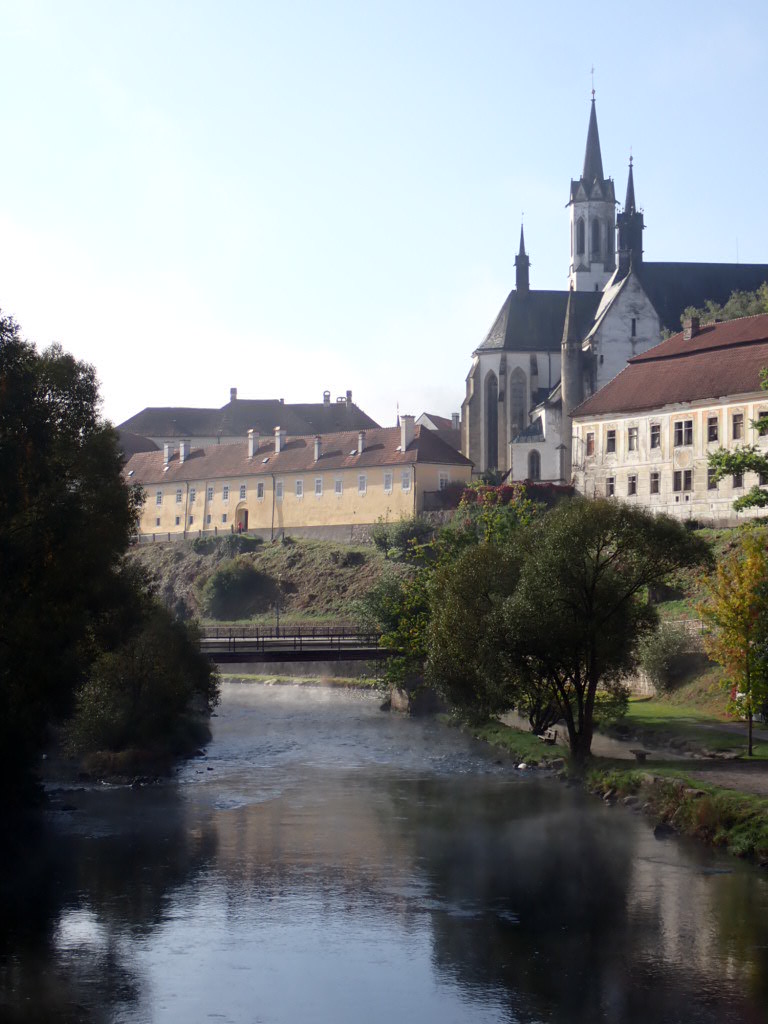
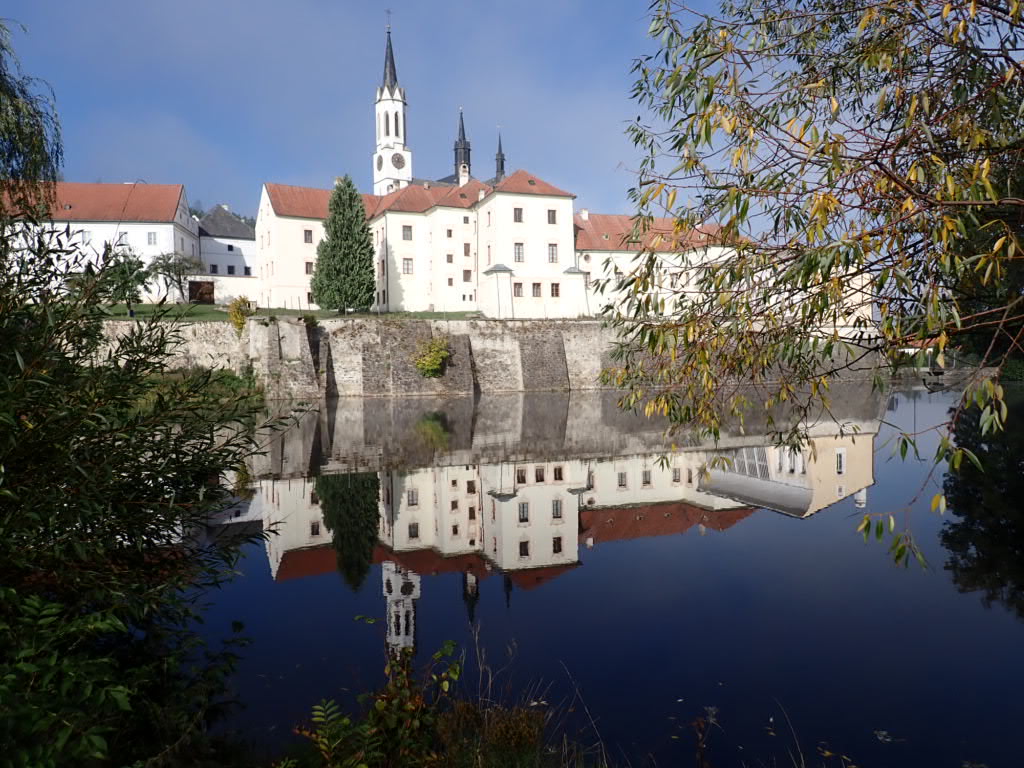
The plan for the rest of the day was to cycle to Zlata Koruna, with a monastery on the river and then take a train the rest of the way to Ceske Budejovice as we wouldn’t be able to ride close to the river anyway and that’s the next place to get close to it. It’s lovely this being my trip and me setting the rules!
But we had to cycle up out of the valley and it was so, so steep, and it went on and on up. A really hard ride/ walk. When we passed the station at Zlata Koruna and I realised how far down into the valley we were going to go to get to the monastery, and then we would have to climb back up to the station, I got a bit grumpy. ‘It’s OK’ Rob said, ‘there is a bus’, Rob said. So, satisfied, we went on a guided tour of the monastery (in Czech but an English printed guide book).
And it was very interesting – now back for the bus. But that little small print in the top right hand corner that we hadn’t noticed? The bus finished running on the 31st August. ‘It’s OK’, said Rob.’There’s a train in 40 minutes’, said Rob. So now we had 40 minutes to go up really steep roads for a train that my expert timetable reader/ geek really did not understand. There was no price on the App and why did it wait for 50 minutes somewhere on route? A school train (it was Saturday)?
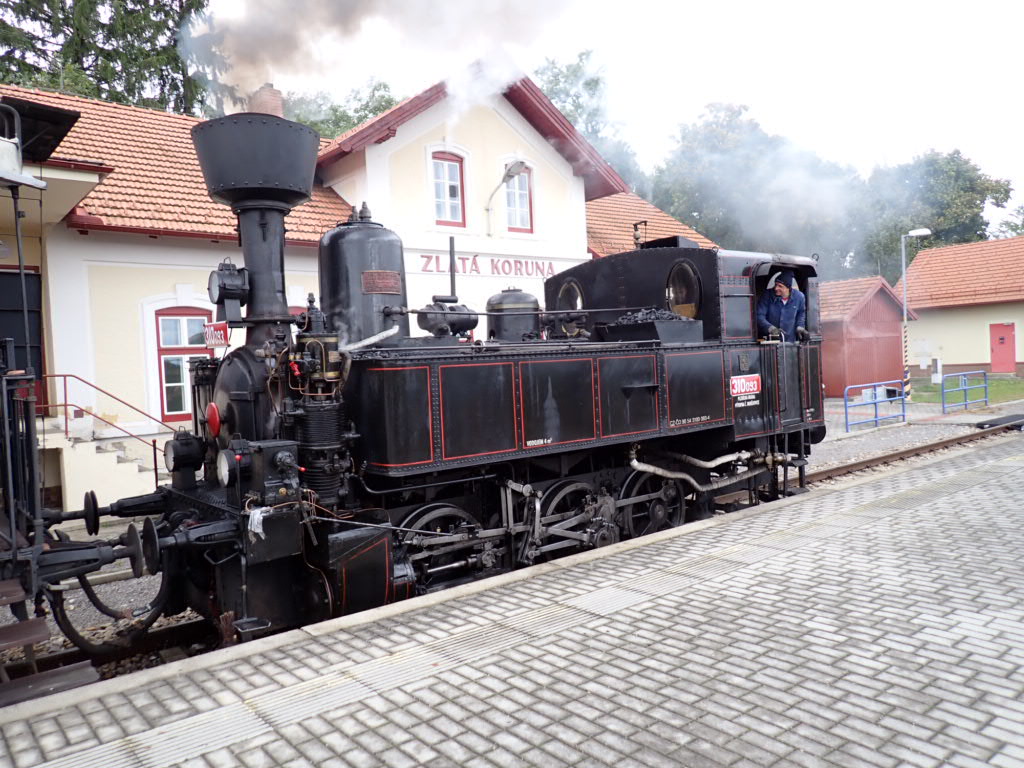
We made it to the station in good time, to discover that it was a steam special that we could not go on – but Rob is so excited! Was it the engine he had seen many years ago? The camera is out ready as I sit huddled up, freezing with the rain beginning to fall. And the whistle of the train and the smoke in the distance announced its impending arrival, as did 3 middle-aged men on motorbikes who were following the train and taking videos of it at each station.
So, to those readers who are pleased for Rob, but concerned for my well-being, there was a train in another half an hour that we could go on and was warm and took us right to the heart of Ceske Budejovice.
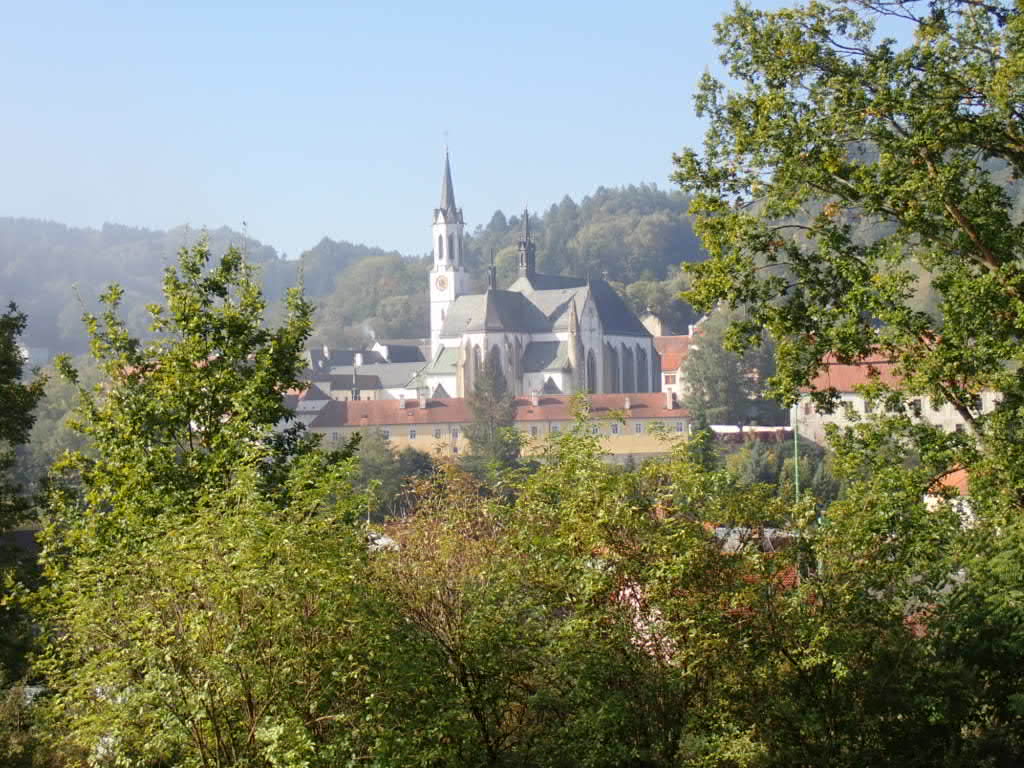
Today was just such a good day. We left Vyssi Brod with a 4 mile climb up out of the valley and away from the river – not a very auspicious start you say? But the views back over the monastery on the banks of the river, were spectacular and Rob spent such a long time taking photos that I was able to get quite far on ahead for once.
The monastery was disbanded after the Iron Curtain was formed and only restarted in 1990.
After leaving Vyssi Brod I was on the look out for potential wedding sites. Smetana picks up a polka dance theme as the river is imagined to pass a wedding on its banks. You can visualize the wedding party in local dress, dancing as they have been accustomed for all their lives, as the music is so crisp and uniform.
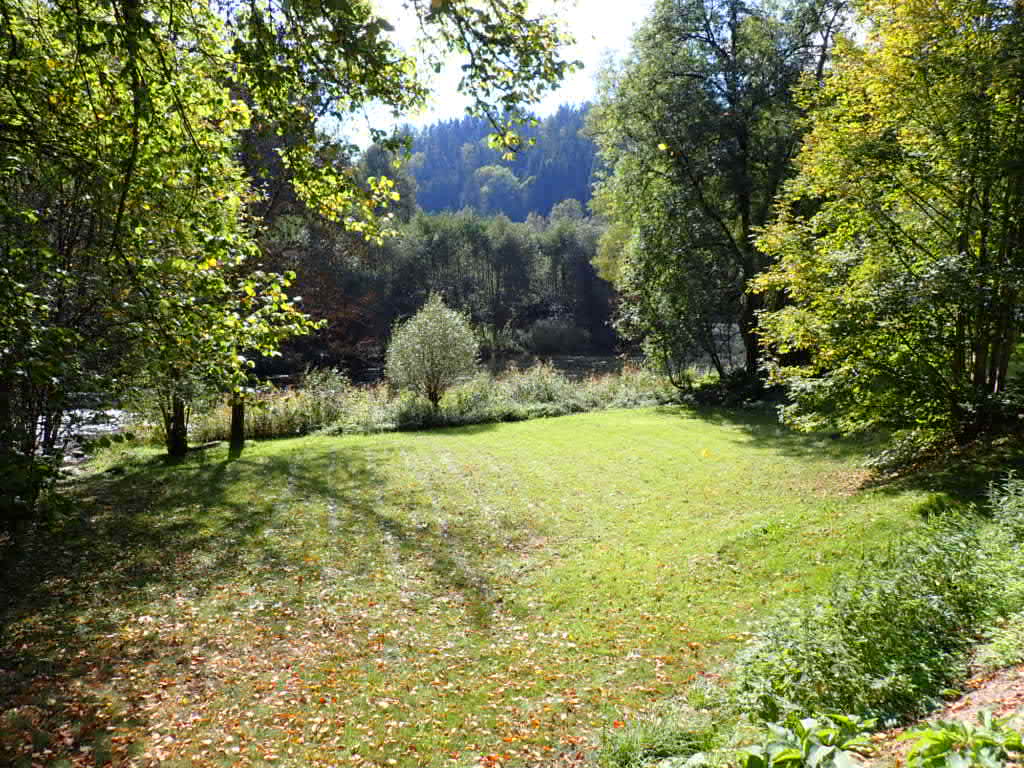
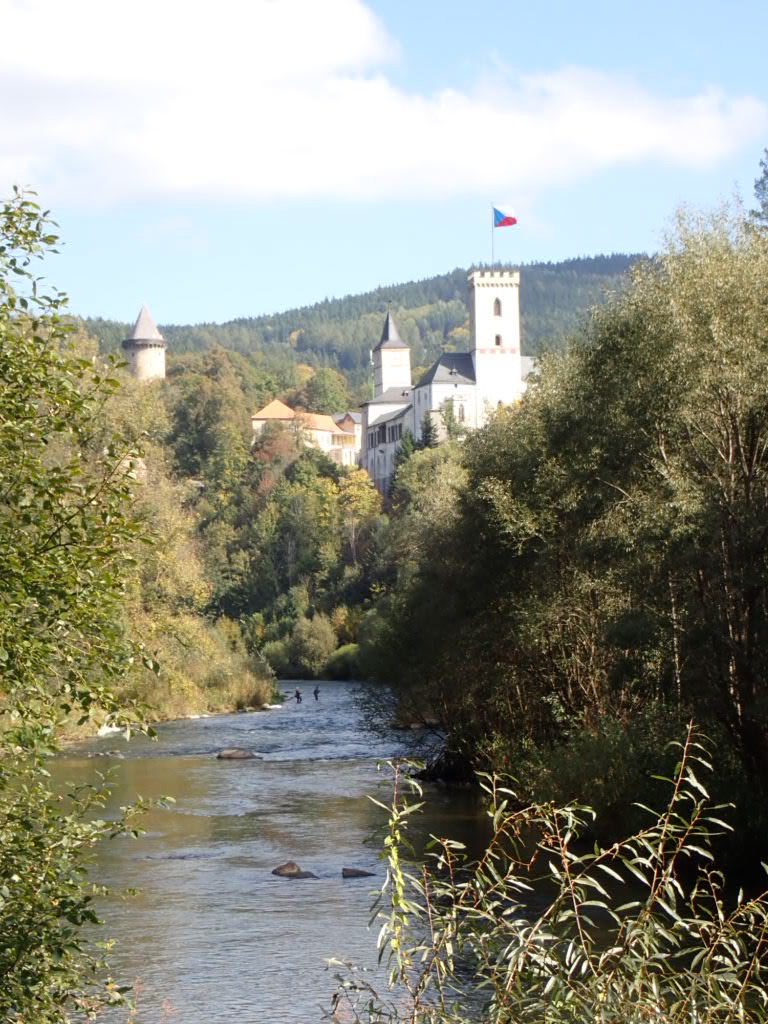
This field, with the river flowing beyond, is perfect with a local hostelry behind the photographer, ready to dispense food and drink to the revellers. This was soon after the village of Rozmberk where the castle was the first we had seen. Built in the 13th century it is one of the oldest castles in Bohemia.
And then bliss – our reward for that 4 mile climb. A long steady downhill run with the river right beside us. The main theme of the music has successfully surplanted Chopin in my head and I am able to hum along contentedly.
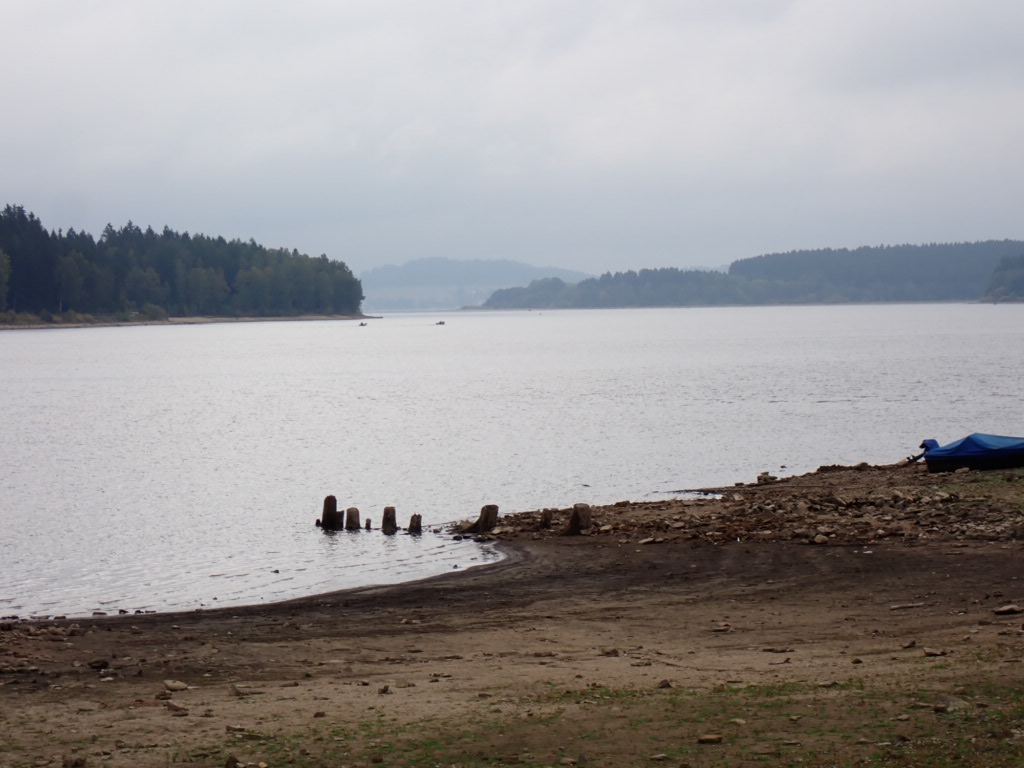
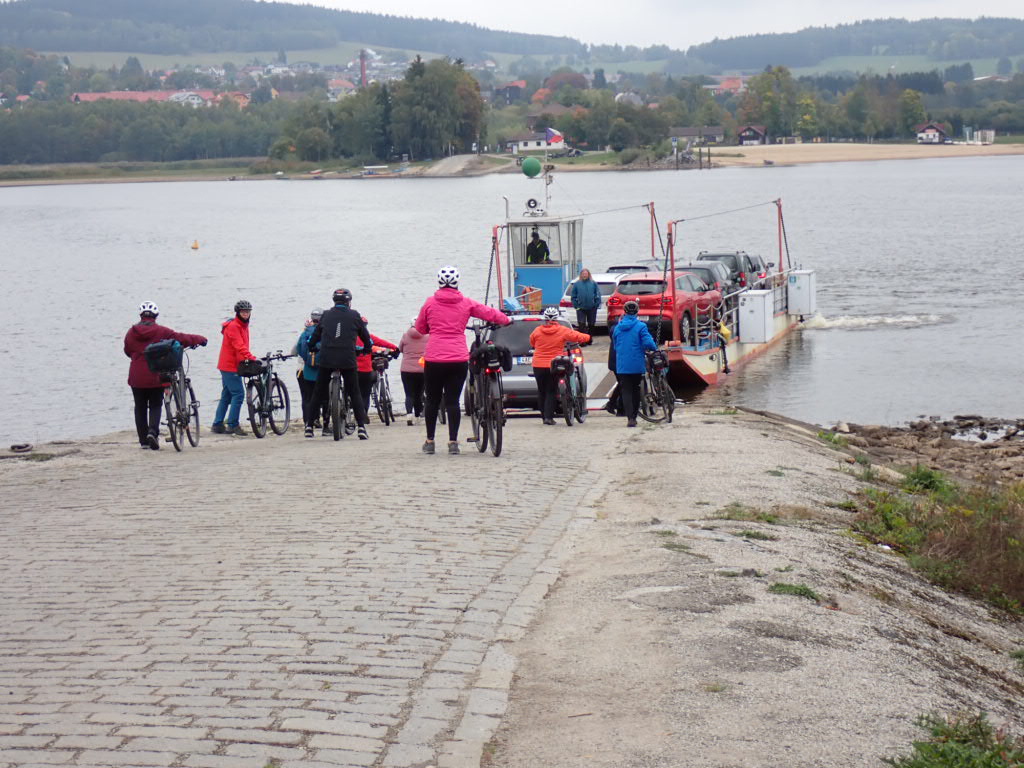
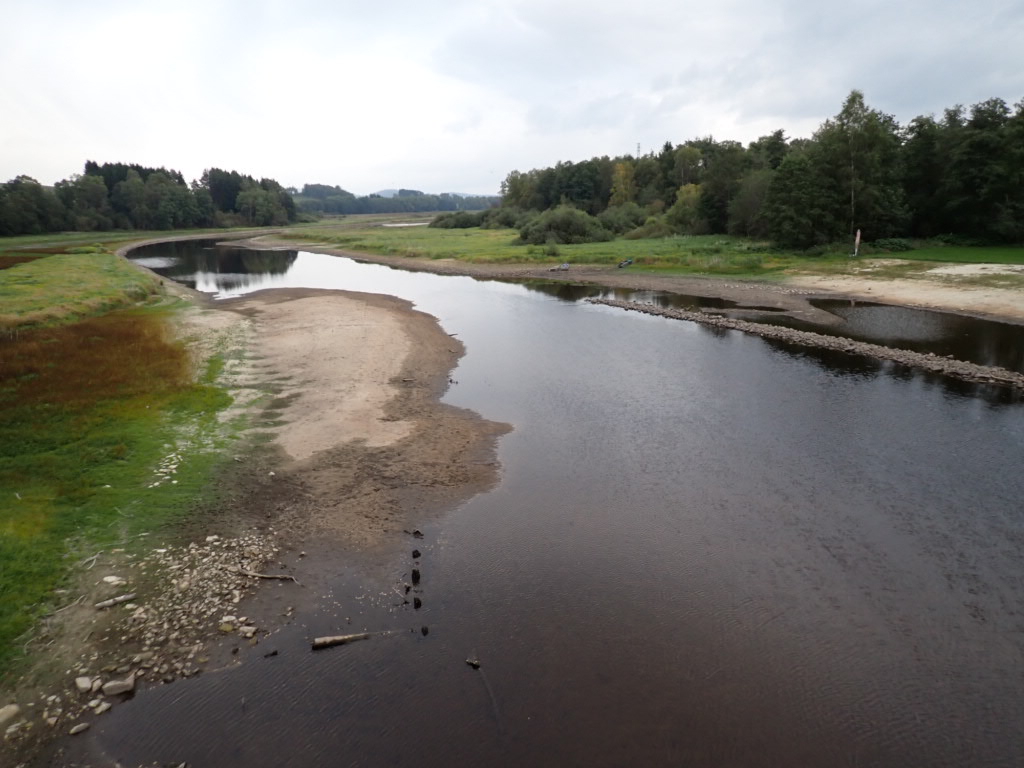
After spending the night at Horni Plana, we cycled down to the ‘beach’. In the 1950s the Vltava became a huge reservoir here- the largest area of water in the Czech Republic. So Horni Plane would have been high up the side of the Vltava valley but is these days on the banks of the Lipno Reservoir. It was billed as the solution to flooding further down the river and also enabled the construction of a hydroelectric plant. So the first thing we did that day was to cross the Vltava to the other side by boat.
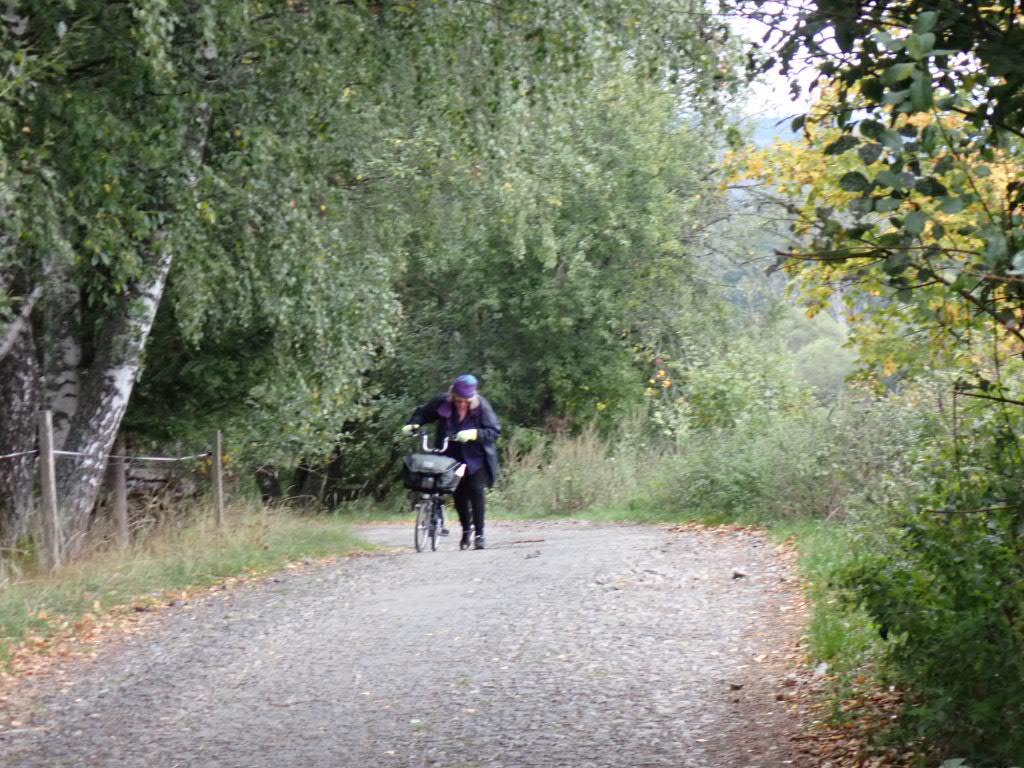
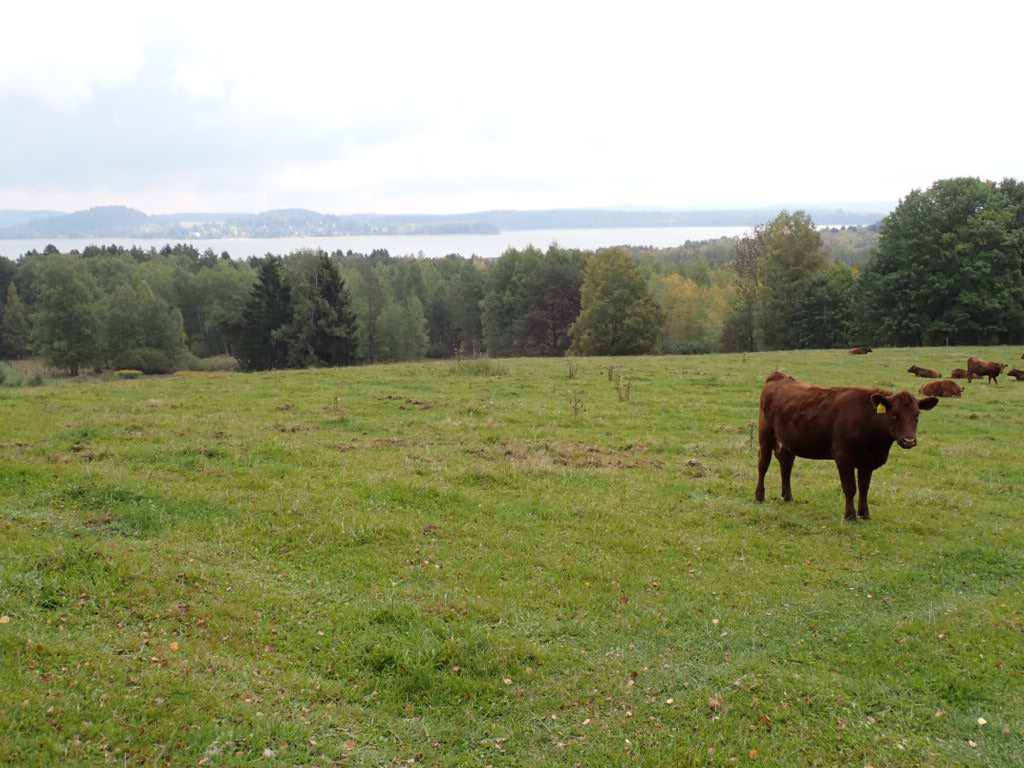
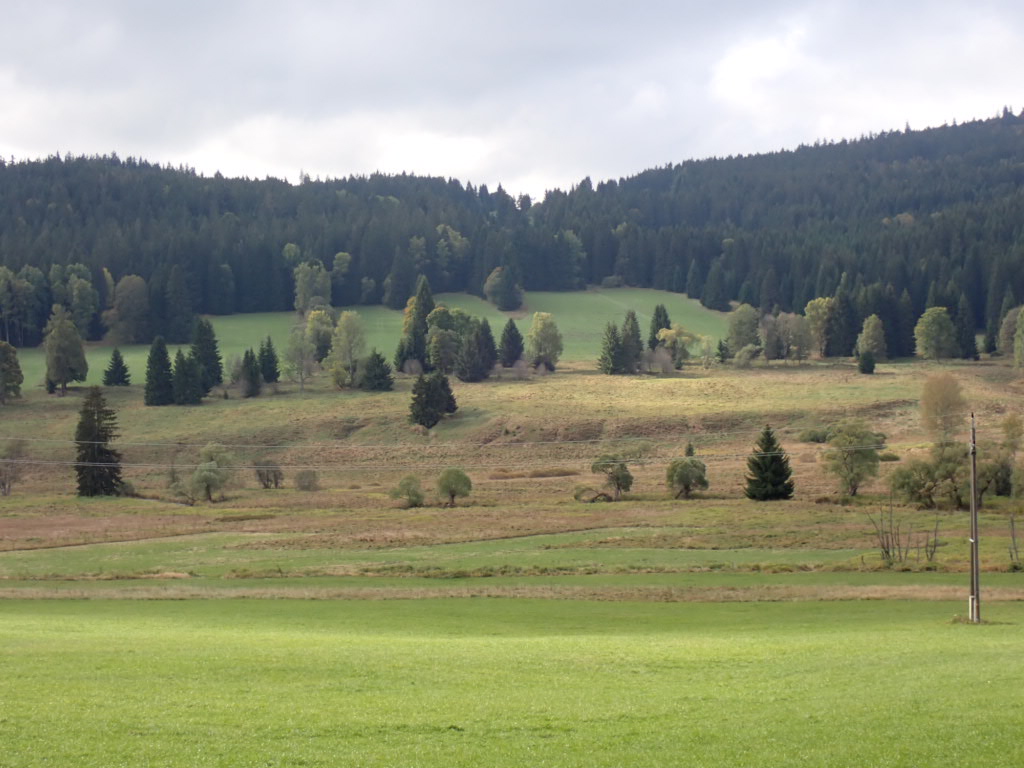
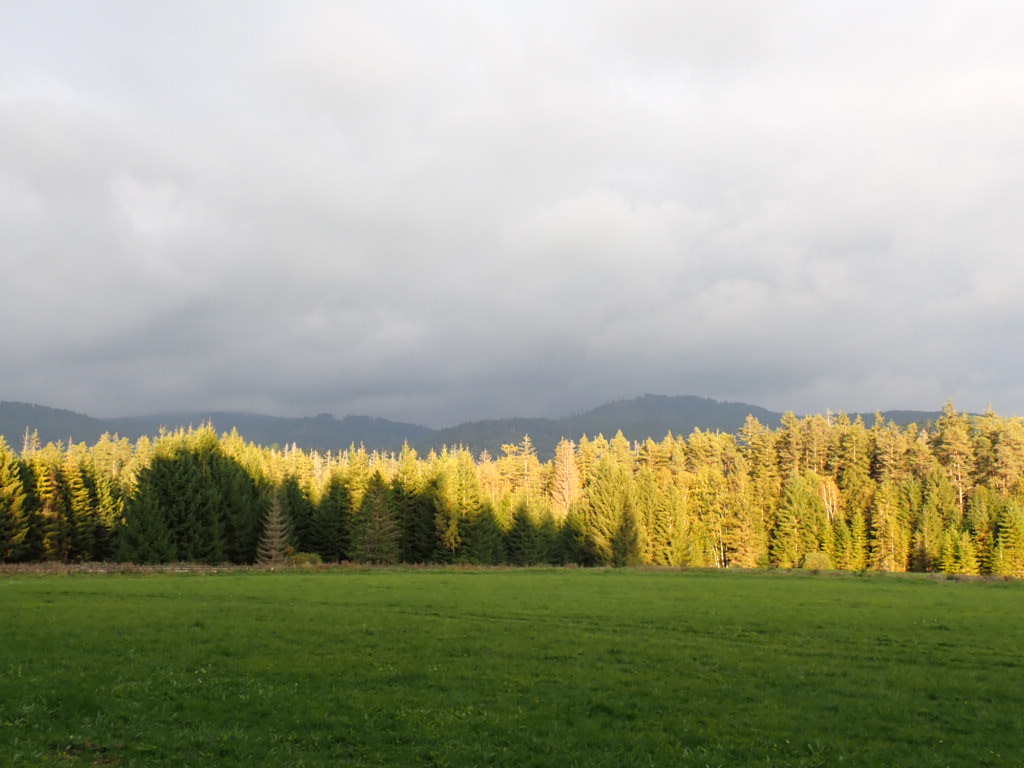
And then we entered the rather strange world that is on the southern side of the river. At times it reminded me of a bit of scenery from Little Red Riding Hood or Goldilocks and the Three Bears. You would think at any moment a woodcutter would come striding out of the deep, dark forest – and, in fact, most of the very few signs of life were lorries carrying logs away from the area. The rest of the time if I wanted to communicate, it was Rob or the cows. I asked Rob why he had not taken photos of the deep, dark forest? ‘Because it was deep and dark,’ he replied.
But in conversing with Rob, a thing we do now and then, he was a mine of information about the area. As we looked over the fields he informed me that we were looking into Austria and, of course, this area between the river and the border was only for the military in the Communist era. Left to itself, the area was a haven for wildlife and trees. Although it is farmed today, there was very little sign of habitation.
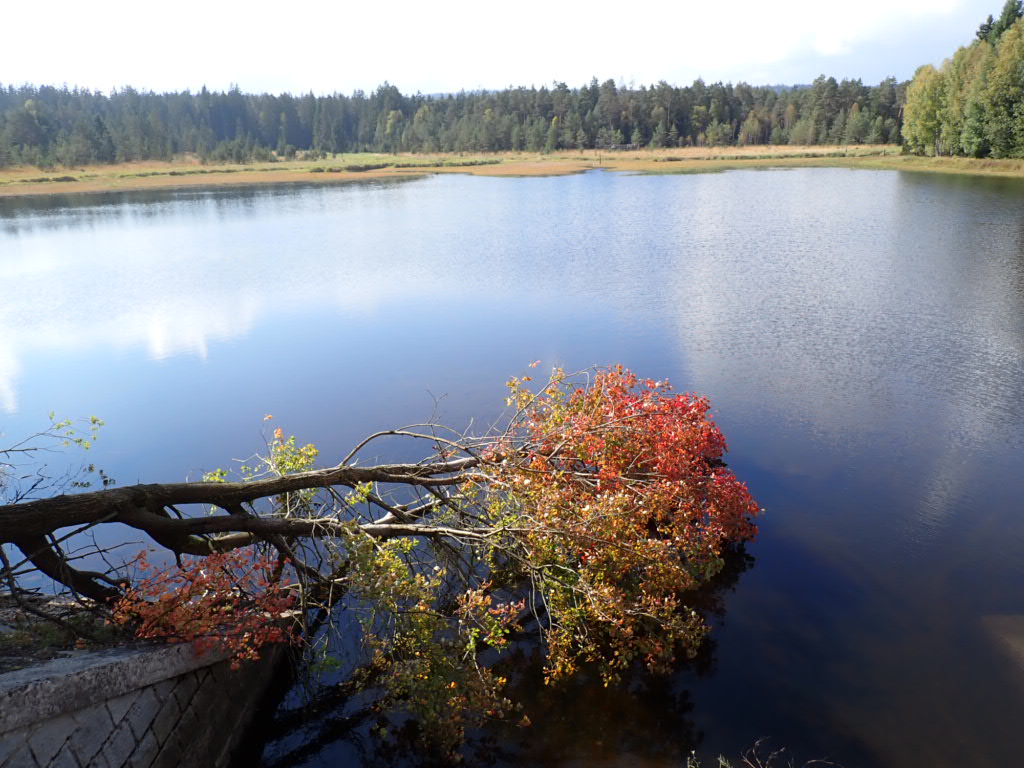
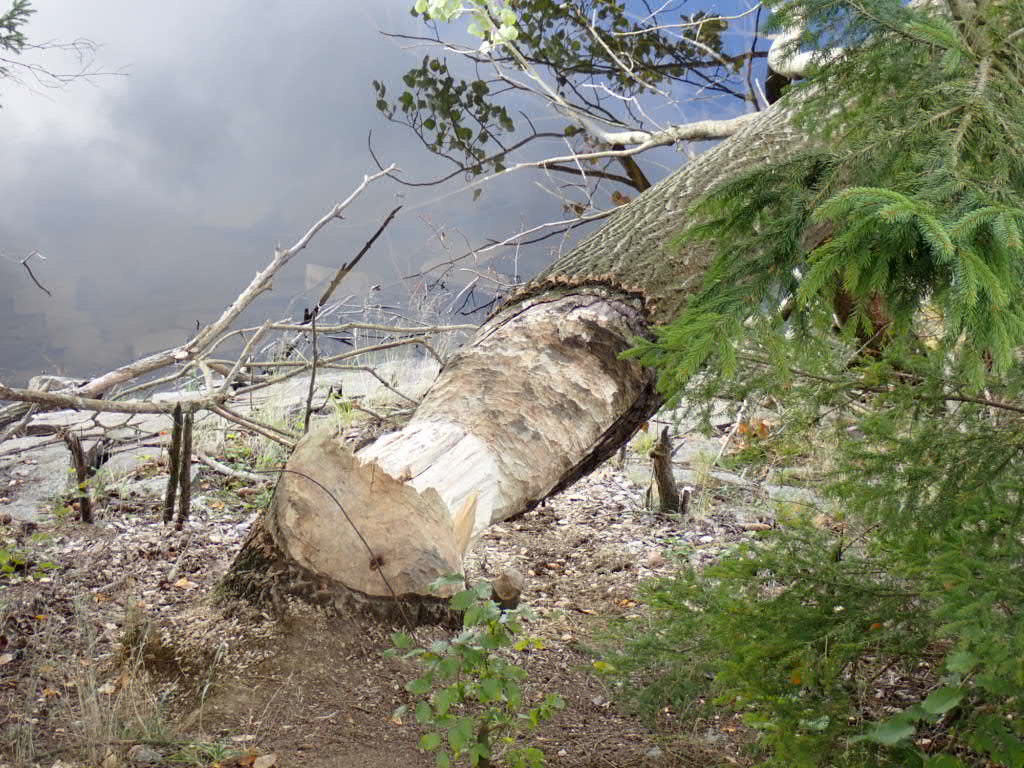
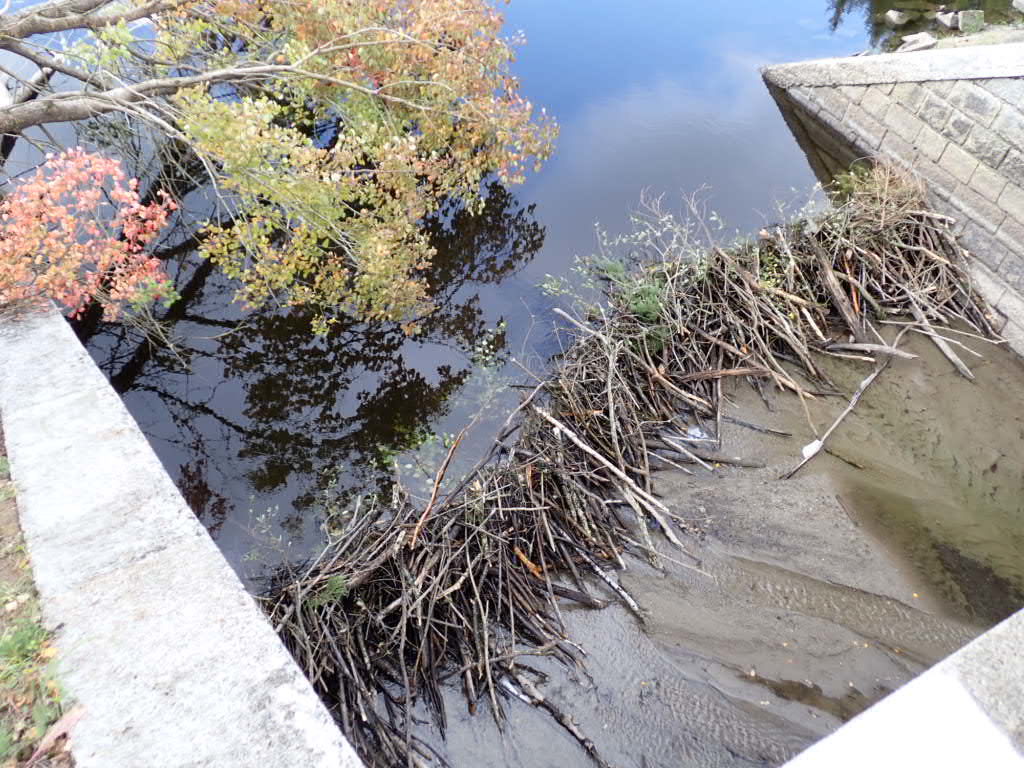
Our lunch stop was standing up on a bridge across a little part of the reservoir, where beavers had been at work – the fallen tree in this photo had been brought down by beavers gnawing right through the trunk- with Austria in the background.
But all is not right in this seemingly rural idyll. There are now few jobs in the region that don’t involve tourism but tourism is affecting the environment in a very damaging way. New recreation resorts and housing, which are turning into ghost towns out of season, are sending water that is not sufficiently treated into the lake. Helped also by the warmer temperatures brought about by climate change, blue algae is blooming and threatening the very tourism that promotes it. There are more tourist beds than residents in the area and a more sustainable future is being sought.
I had a moment of emotion after walking over the massive dam and looking over the other side to see the Vltava appearing in a more recognisable form and becoming again the river of Smetana’s music.
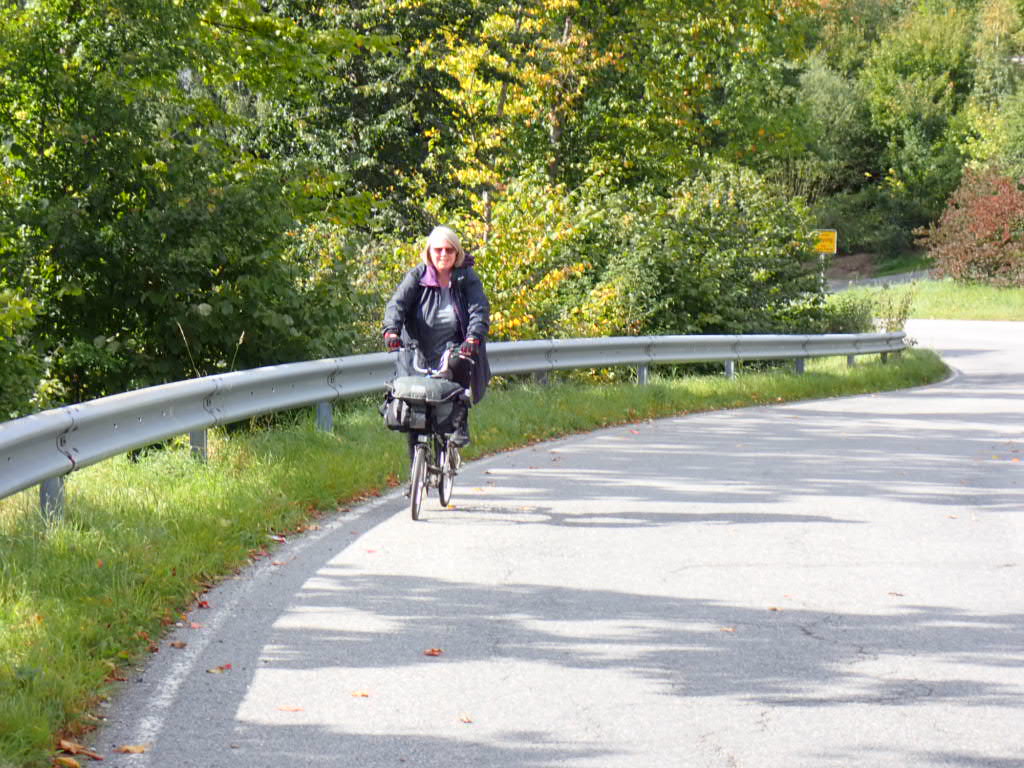
If what goes up, must come down then in cycling terms what comes down, then nearly always must go up. When I planned the trip to follow a river, I was aware that rivers do flow down and that generally we would be going more down than up. The first 7km from Kvilda to Borova Lada really were down – such a reward from the long climb of the day before. We hit our highest ever speed on Bromptons at at least 35mph. It was within the speed limit so no worries. But with the downs came the cold. We left Kvilda with the temperature lurking around 4 degrees C. Throughout the day it was gloves and hat after I had removed the thermal vest I started out with. So the downhill stretches were welcome but often a sign that we would have to make back up most of the height around the next corner, but then again a bit of climbing put back the warmth into my freezing fingers.
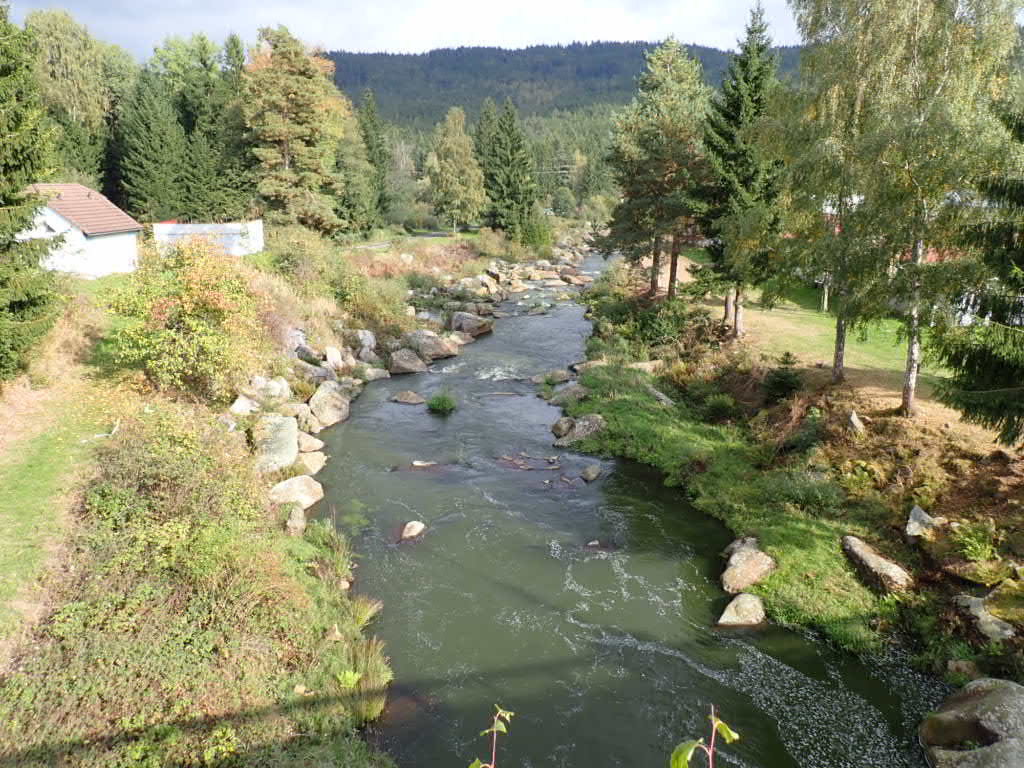
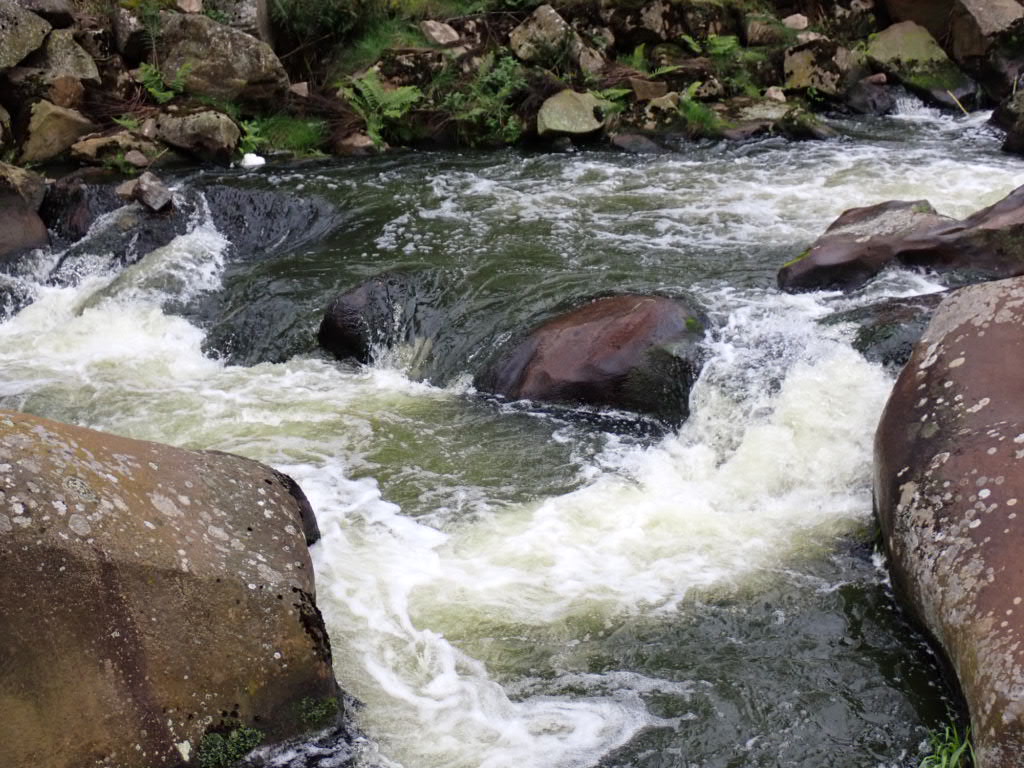
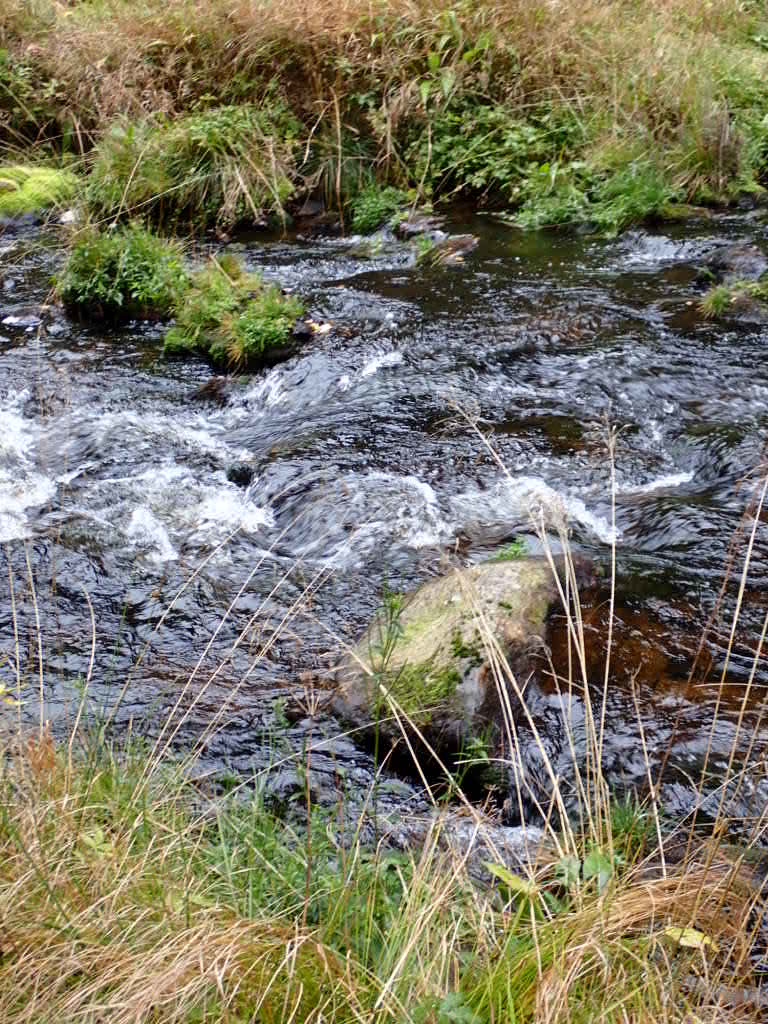
The countryside that the Upper Vltava flows through is very easy on the eye. All day I was looking out for the river and, when hydro-electricity is not using the water, the sound is beautiful. Smetana captures it stunningly, building up from a single melody line to such a complex cacophony, as more tributaries join and the river becomes more than a bubbling brook. The theme for the piece comes from a 16th century Italian song that formed the basis for a number of central European folk songs and then latterly, the Israeli national anthem.
The minor key of the theme seems to suit the sad history that is often evident in the region. After Germany annexed the Sudetenland in 1938 Nazi law was introduced into the region and the large Jewish population was persecuted as elsewhere. But the Czech population was also seen as ‘untermenschen’ by the Nazis and were used for forced labour. After the war, the tables were turned. The photo above on the right shows where the village of Birkenhaid (its German name)/ Brezova Lada (Czech name) was. They produced glass rosary beads but after the war the village was abandoned when mass expulsions of ethnic Germans started in the region. In October 1945 the Czechoslovak president called for ‘the final solution to the German question’. Having been to Wannsee where the Nazis discussed the ‘final solution’ which took the Holocaust to a new terrible level, you just wonder if people will never learn. Over 2 million ethnic Germans were taken from their homes and forced out of the country. Around 15,000 are believed to have died in the process.
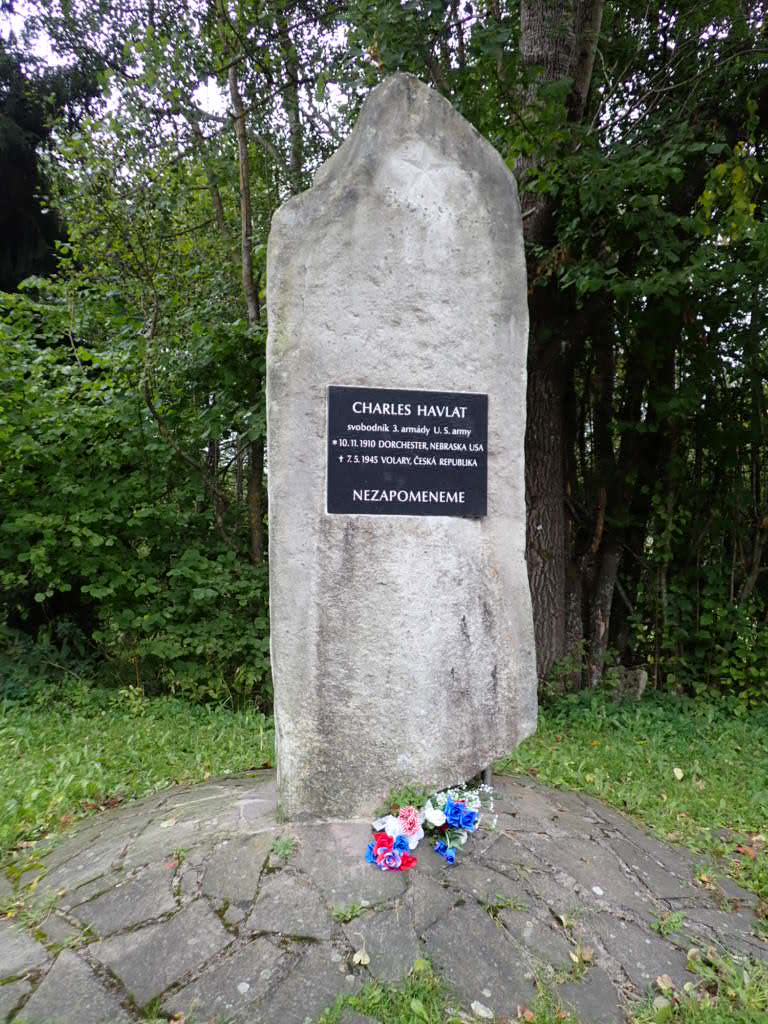
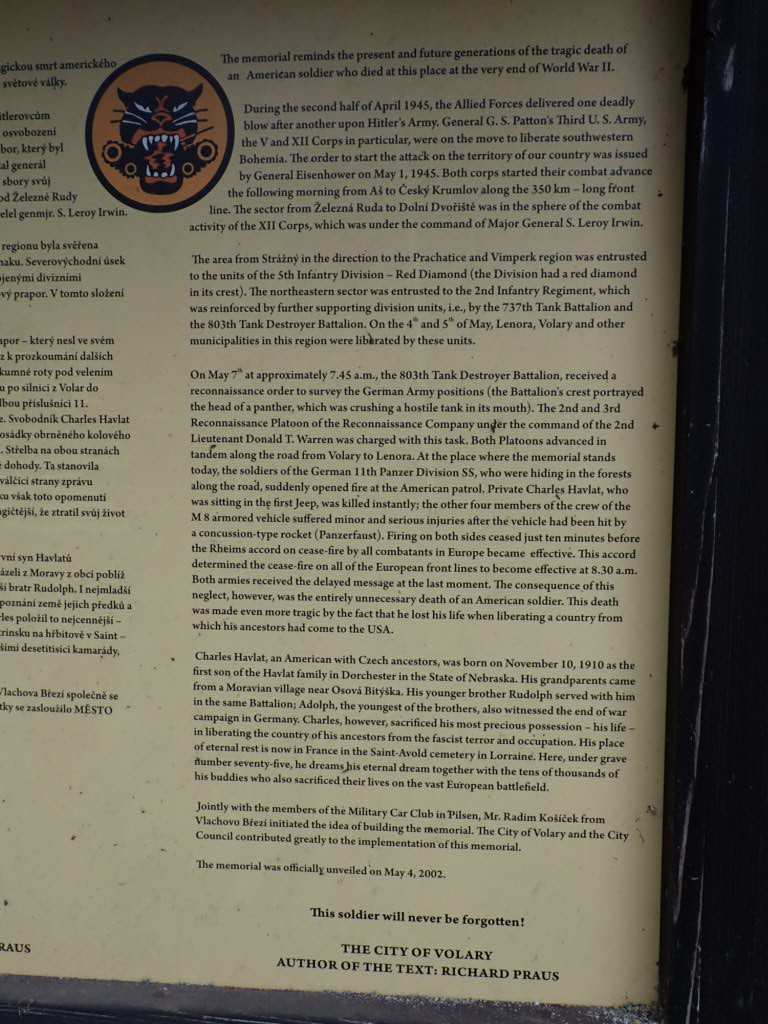
I have tried to read a number of information boards along the way, but even if in German, I have struggled to get more than the gist. Two bits in English stand out and made me uneasy but it took me a while to work out why. Back to Freyung in Germany on our route up to the source. There was a commemoration of those in the town that actively worked to surrender to the Americans in 1945 and so avoid many deaths of the military on both sides, and civillians in the town. It also made ‘special mention’ of those that had campaigned to not surrender. The board spoke of the Americans as invaders. Just hold on to that thought whilst I take you to another board that I saw near the Vltava, remembering an American soldier, whose forebears had emigrated from the region, who was killed during the ‘liberation’ by the American army just after the ceasefire had been declared, but the news had not got through to the armies on the ground yet. I was struck by these boards that had been erected years after the events but used such different language in two different countries, that the Germans might still describe the Americans as invaders.
And some last pics of a lovely day – absolutely shattered though!
When we couldn’t find the source of the Vltava River, the natural thing was to check out Ellen’s project on Google Earth. My daughter, a second year Geography student, is working through a true labour of love as part of my 60th birthday present. Her project has involved mapping the first part of the river on Google Earth with lots of interesting places to check.. We hadn’t quite thought how in the middle of nowhere we were though and had no data to use. So we just kept going on in faith.
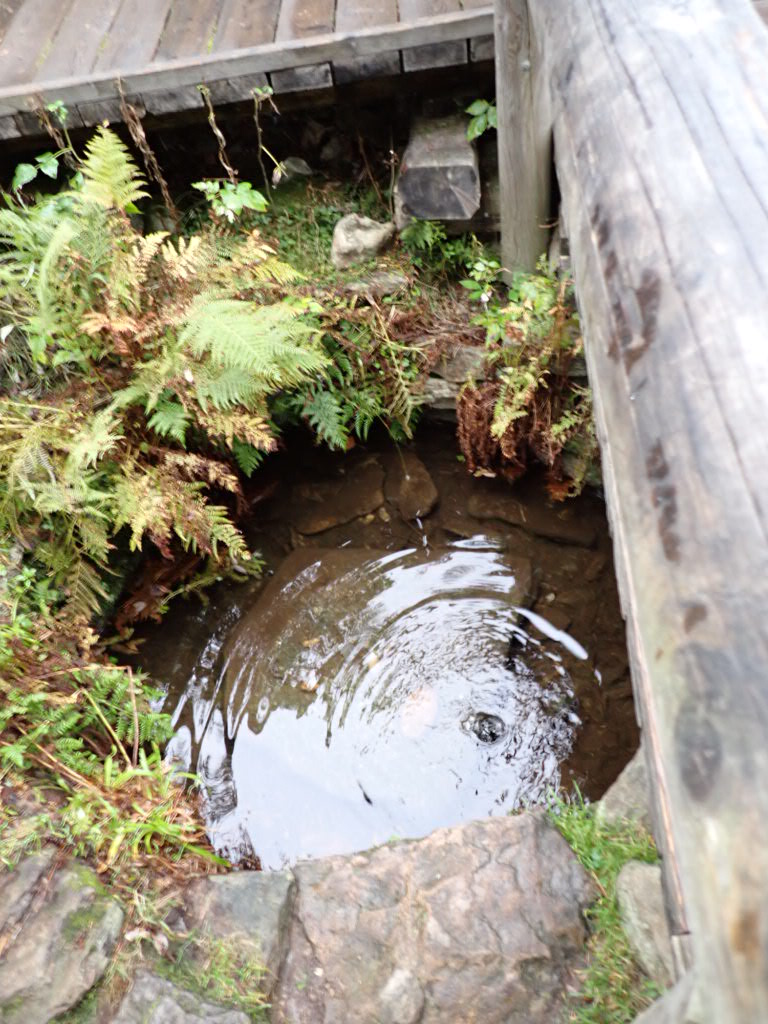
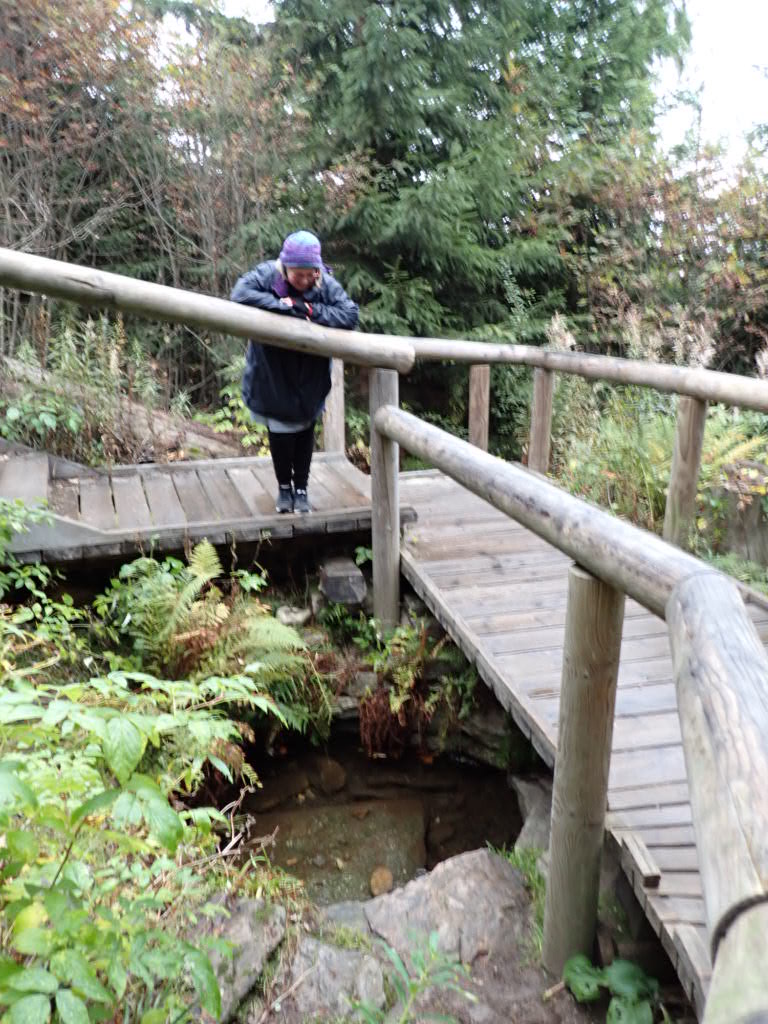
And round the corner, there it was. So small and inconspicuous but for a few picnic tables and a very helpful info board – in Czech. Down a few wooden steps to Pramen Vltavy and this is what you see:
This really doesn’t do it justice. You have to listen to to the first two seconds of Smetana’s Vltava https://m.youtube.com/watch?v=AvdJx4y5omg and you will hear that little ‘pop’ as a bubble comes out the ground. For those with me on Facebook I have posted a video there. Haven’t purchased WordPress Premium yet to allow me to do that here!
So why did Smetana’s story of this river in music become such a classic? This is one of 6 ‘poems’ that Smetana wrote towards the end of his life. Before these he hadn’t risen to fame in his country that was part of the Austro-Hungarian Empire, partly because his liking for the music of the German composer, Wagner, was out of step with the sympathies of the time. Taking his inspiration at this time from the Hungarian composer, Liszt, allowed him the freedom to write these six poems in a narrative style. It is absolutely incredible that Smetana had lost his hearing when he was writing ‘Vltava’. I had a big think about this because I hear music in my head nearly all the time – sometimes just a phrase or a theme, endlessly – which can drive me mad (and others, if I forget and what is in my head comes out), but I just hear a single line – a part or a melody. I can read music fairly easily but reading a musical score and hearing how all the parts would sound when played together – that’s another thing totally. It’s odd that excerpts from Chopin are more in my head this week (must change that somehow). So Smetana must have been able to ‘hear’ how his composition was going to sound, when he never had the joy of hearing it played to its first audience.
The Vltava was first performed in 1874, a celebration of the longest Czech river and the countryside through which it passes. Intensely nationalistic (Smetana had been part of the failed uprising against the Austro-Hungarian empire in 1848) Smetana had found a musical language that was distinctly Czech and appealed to those that wanted national self determination free of the current rulers. All the 6 works in this collection were first performed together as ‘Ma Vlast’ (‘My Homeland’) in Prague in 1882.
When the Nazis occupied Czechoslovakia, Ma Vlast was banned from being performed but now the work is performed annually in Prague on the anniversary of Smetana’s death on the 12th May.
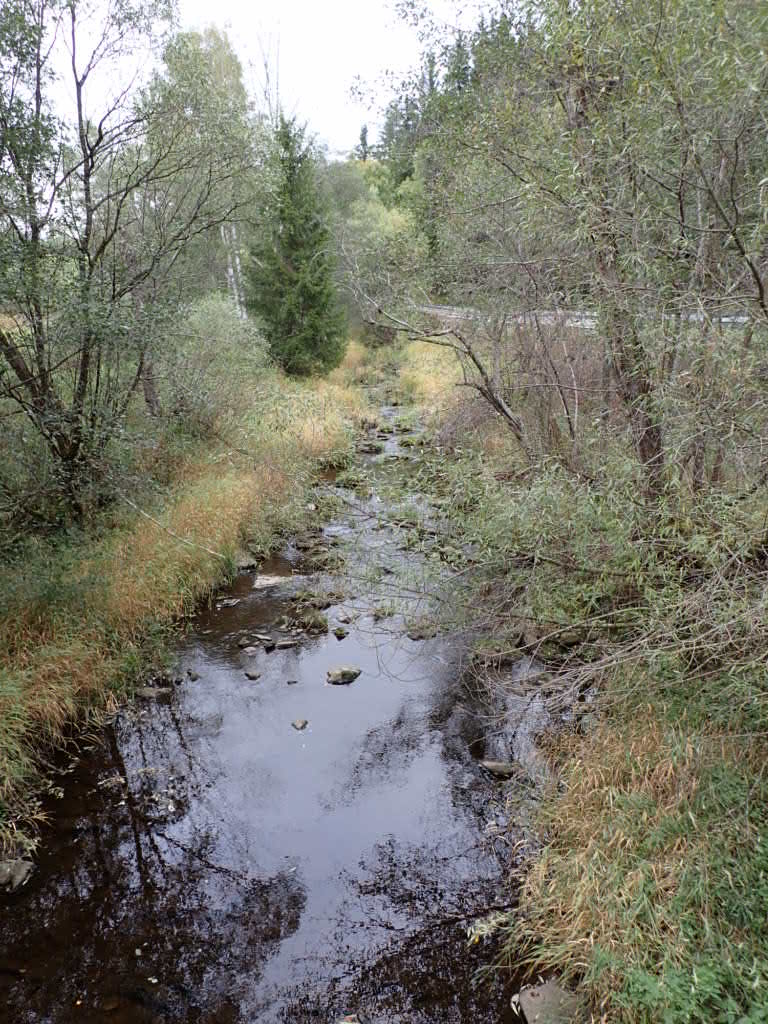
Seeing where the water that feeds into the great river rises was definitely the highlight but there are many other tributaries that feed the Vltava. This is the longest.
And after that, it was blissfully downhill all the way to Kvilda, where we stayed the first night.
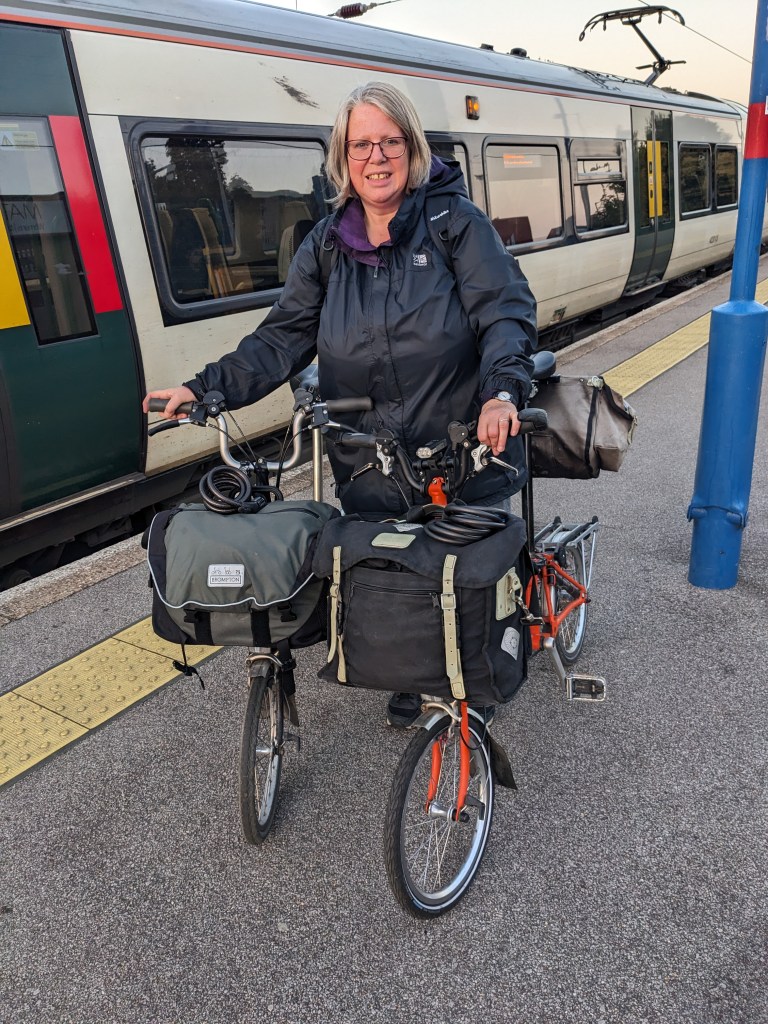
Not starting work each day until 11am is making me soft. The alarm went off at 05.50 giving 10 minutes of turn over and try to ignore the whole world. 07.00 saw us at King’s Lynn station with less minor hiccups than usual – but the time explains why I thought I was actually smiling. I am of course riding both of the bikes below simultaneously- not.
The whole journey to King’s Cross was needed to get up and running with this blog – but if anyone knows how to write text beside the photo above, please send a postcard. I only swear about once a decade but it was tempting today.
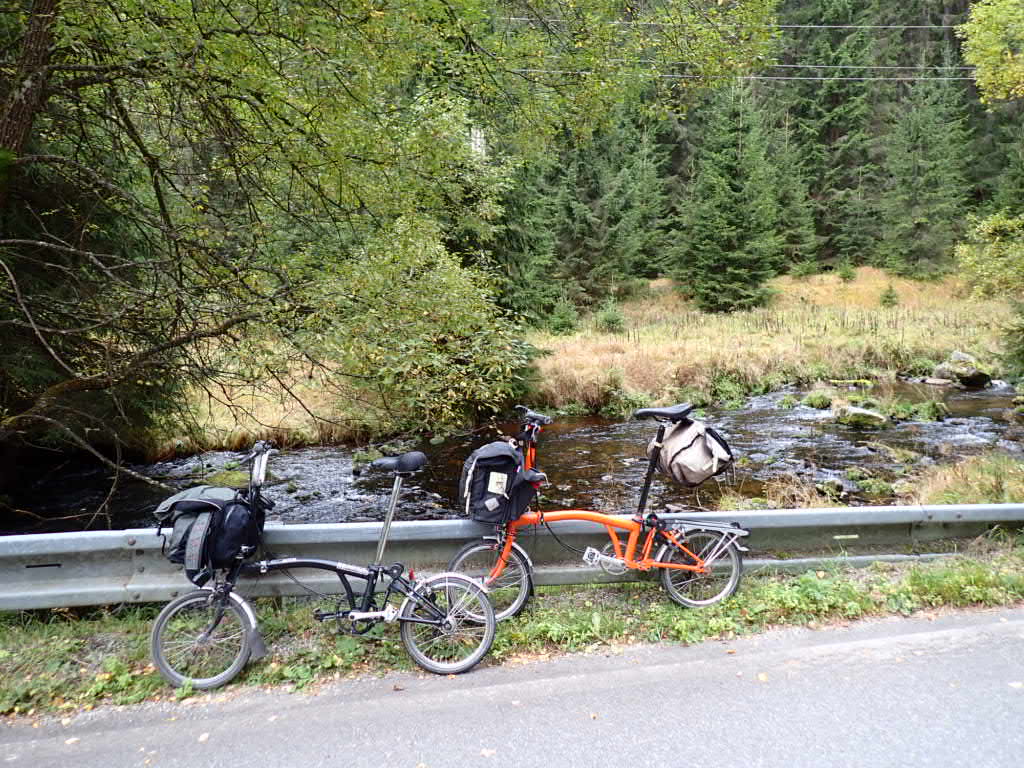
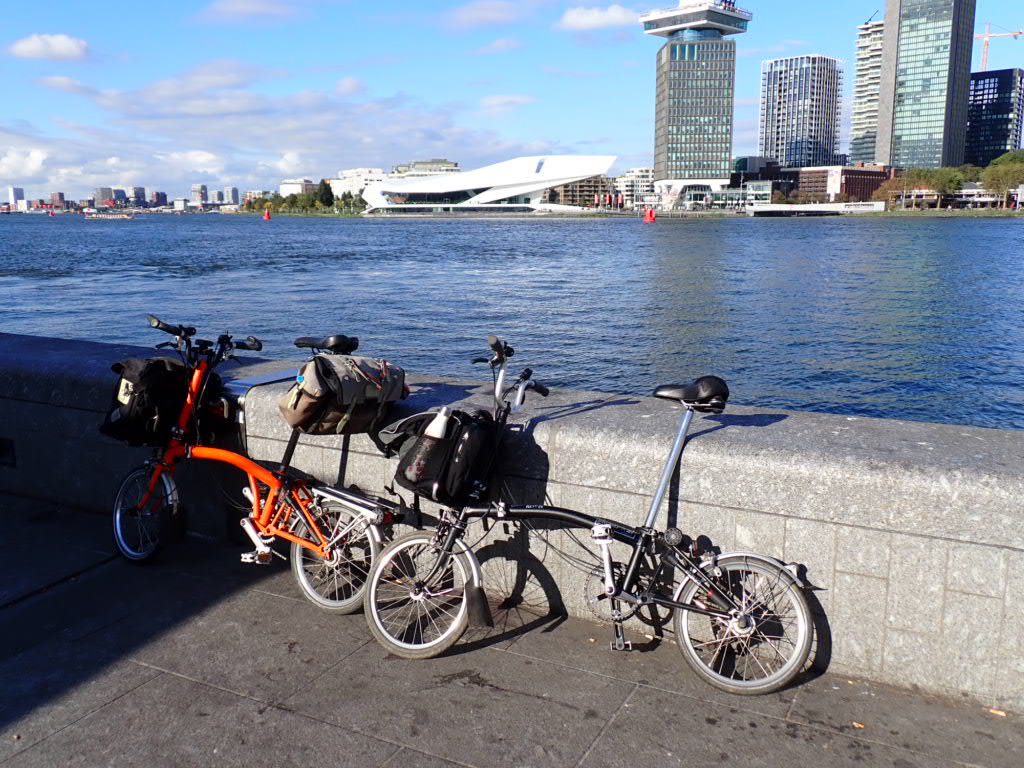
I am not quite sure why Rob sees the need to insert our bikes into nearly all the photos but they do look cute side by side and they are having a great convo about the state of the track around Littleport.
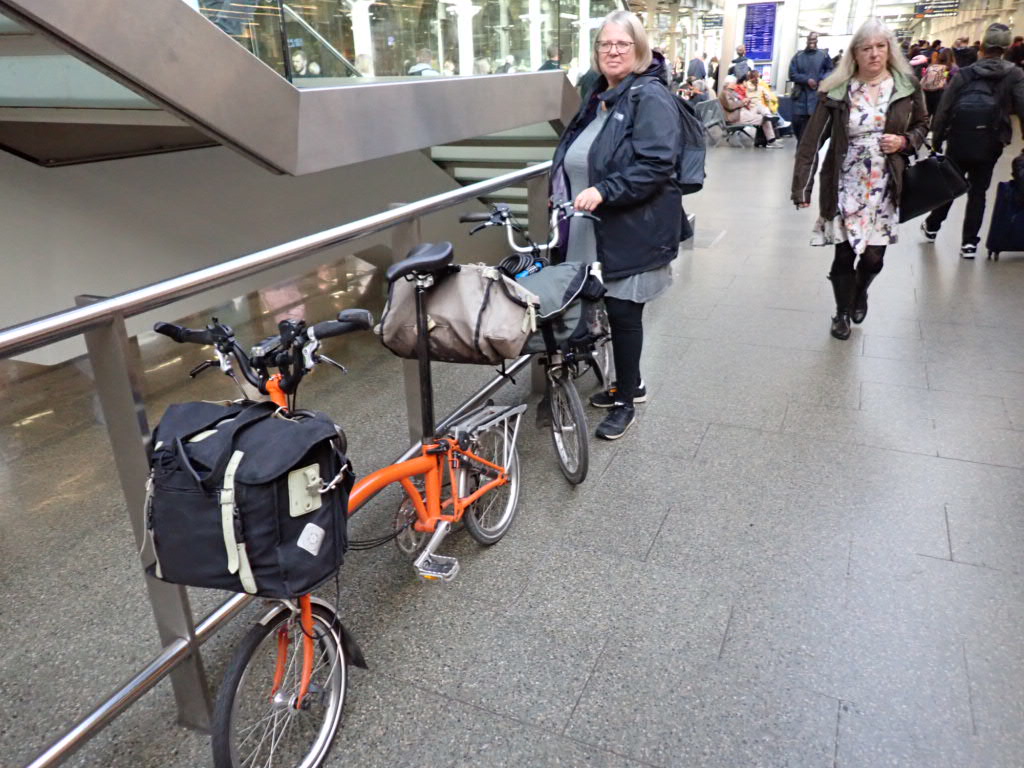
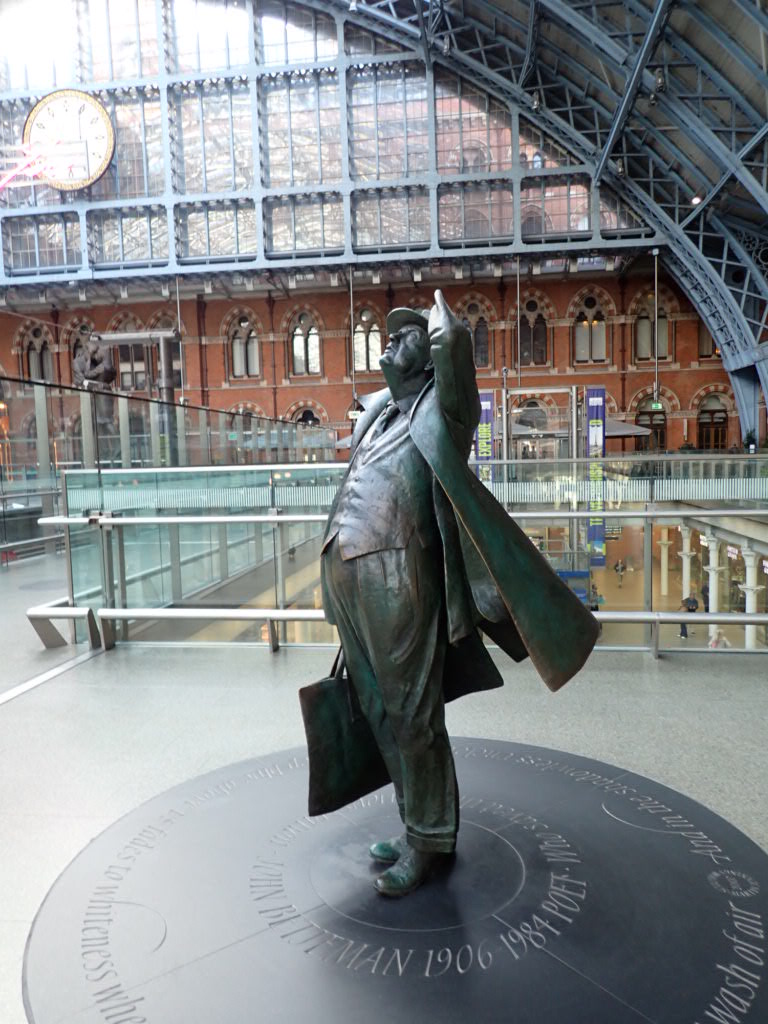
Nearly coffee time so almost smiling at St Pancras as Rob nips off to see Sir John.
I think he is worried about that pigeon up above.
The Eurostar proceeded uneventfully except I had to remind Rob to time the passage under the Channel. Rob has been doing this every time in 25 years of us going on it now and then and long before I was with him- and this was the first time he had forgotten!
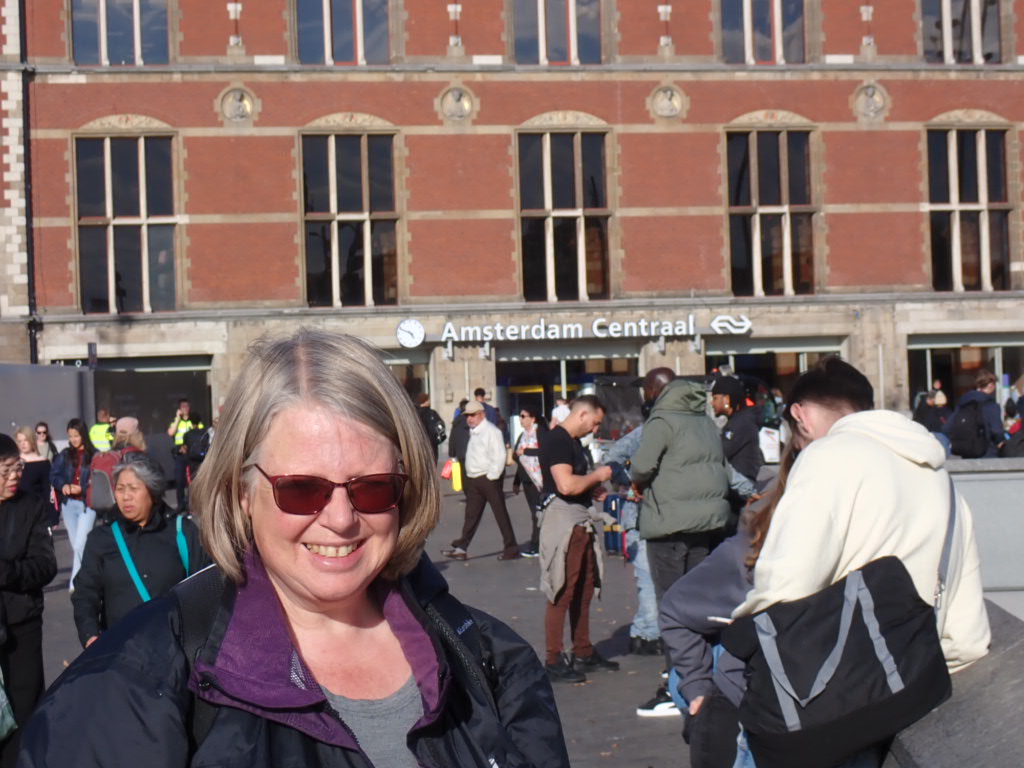
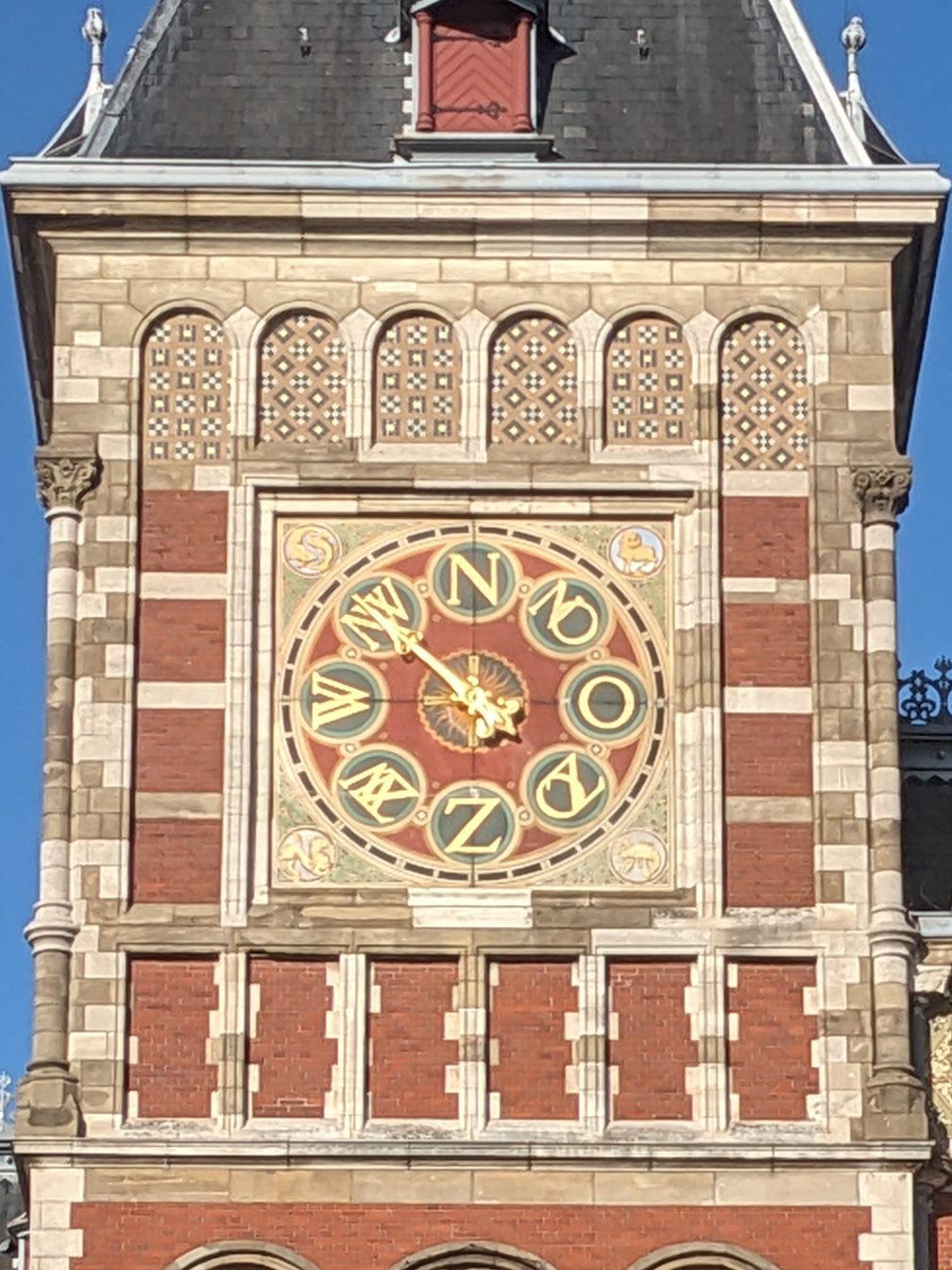
2 hours in Amsterdam to spend our first money (coffee not included) as we had eaten the food we had brought with us. A ‘take your life into your hands’ bike ride where so many cyclists know exactly where they are going and we really didn’t have much of a clue. And a look at a wind direction clock.
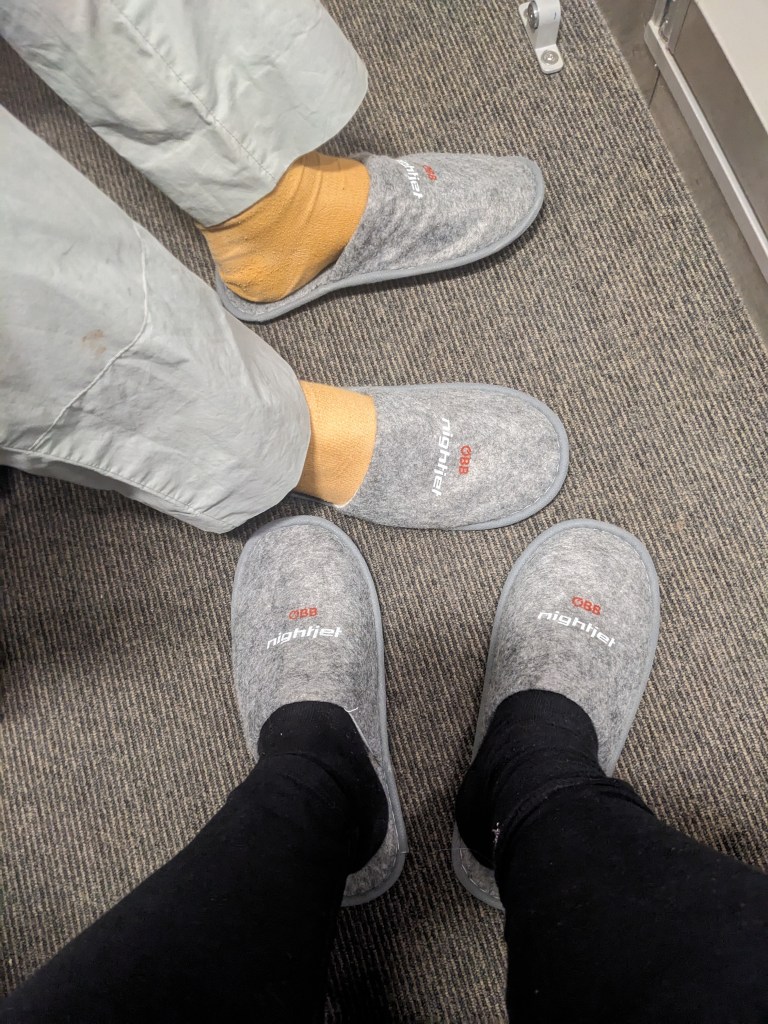
We are now on the NightJet in a cubby hole that is bed for the night. Rob, being a proper husband, has kindly taken the top bunk. I was so excited by having a toilet but can’t use it as it has run out of water (why this is so when the train started at Amsterdam?) but I will be consoled tomorrow by a bit of a refund. Tonight, not so much, as I pad along two carriages to the nearest toilet. But at least they have provided us with slippers that I might just have to find room in my luggage for.
Looking back on last night, that all seems so naive. The problem was with the pump of the toilets and every time the train was disconnected from power, Rob is guessing that the battery kicked in and the toilet made repeated attempts to flush incredibly loudly. But that would not have been so bad if the bedside lights did not repeatedly turn themselves back on – note the repeated use of ‘repeatedly’ – I had to pad off to find a member of staff who disconnected them so that they would not come on – somewhere around Hanover I think.
But good things do happen – I sometimes think God answers the prayers we haven’t prayed – yet. How could the train be two hours late, but we arrived early? We needed to get off at Passau but that would have been at stupid o’clock so Rob planned for us to go on to Linz, in Austria, get off at a civilised time and get a train back to Passau – one plans these excursions when one is not always paying the full price. As it was 07.40am (06.40 in the UK) seemed perfectly civilised, especially when the toilet noises acted as an early alarm call. As events unfolded, we were really grateful to be at Passau that bit earlier.
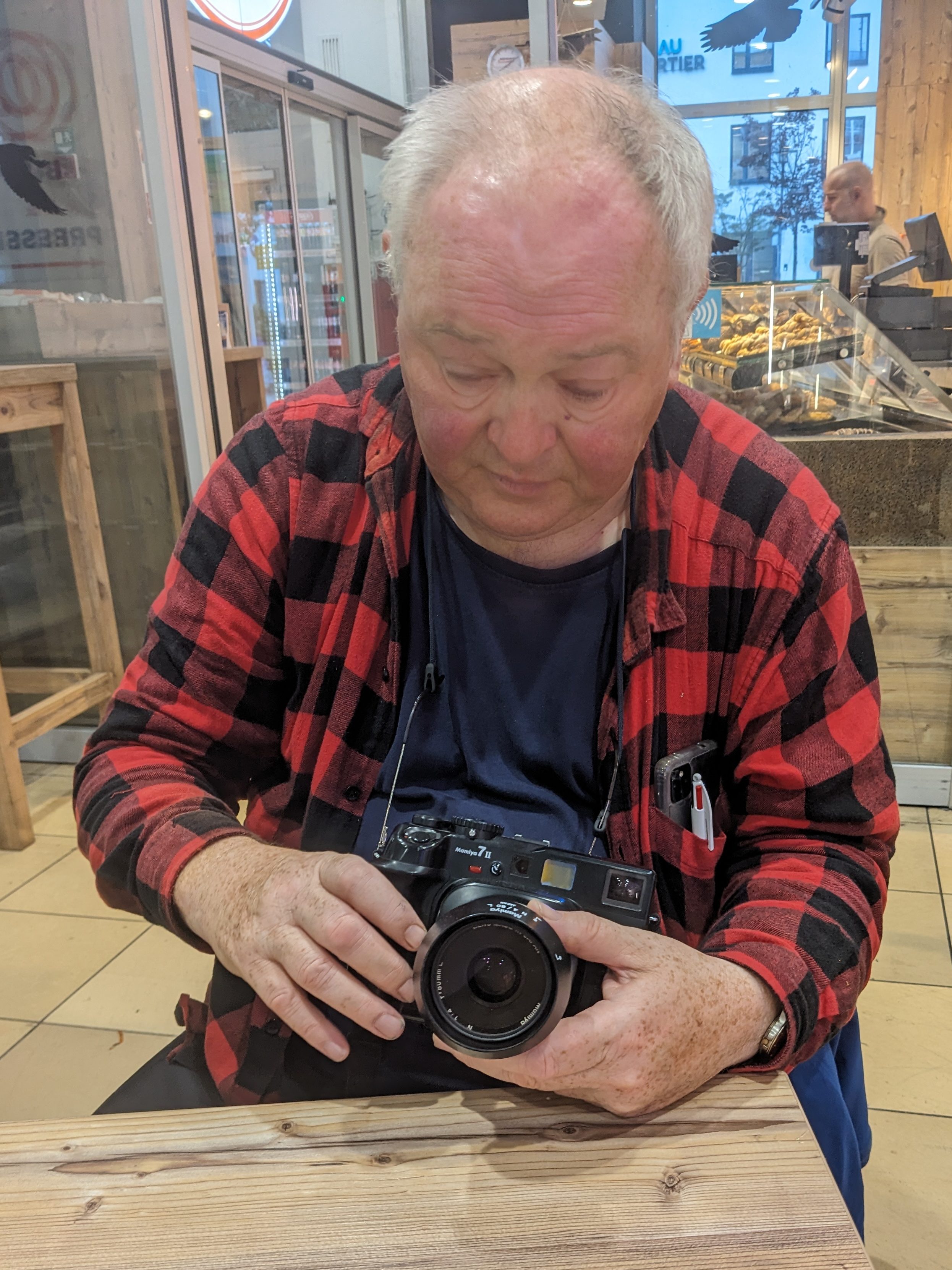
At Passau Rob got his Mamiya 7 out – a sign that serious photography would commence – none of this new fangled digital malarkey (except this neat little new digital compact that has taken most of the photos so far). However none of the results of Rob’s labours will be seen until after an extended darkroom session, to process and then print the films – first as contact prints and then the chosen few as final prints. I guess I maybe able to put some scanned negatives on the blog quicker than that.
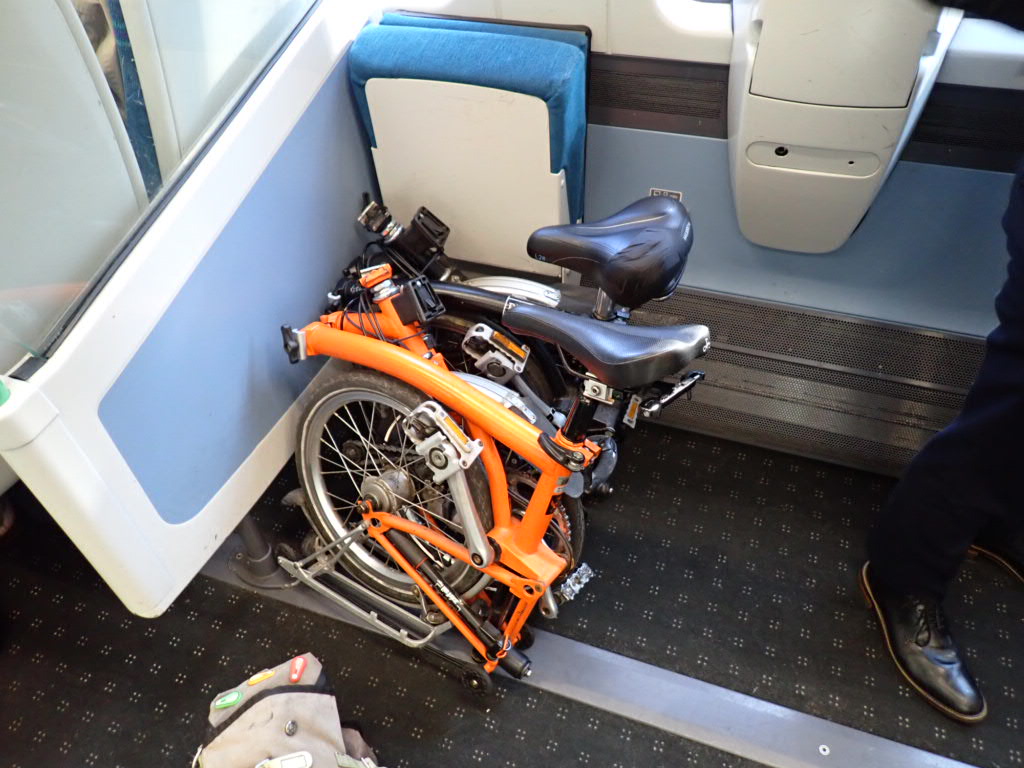
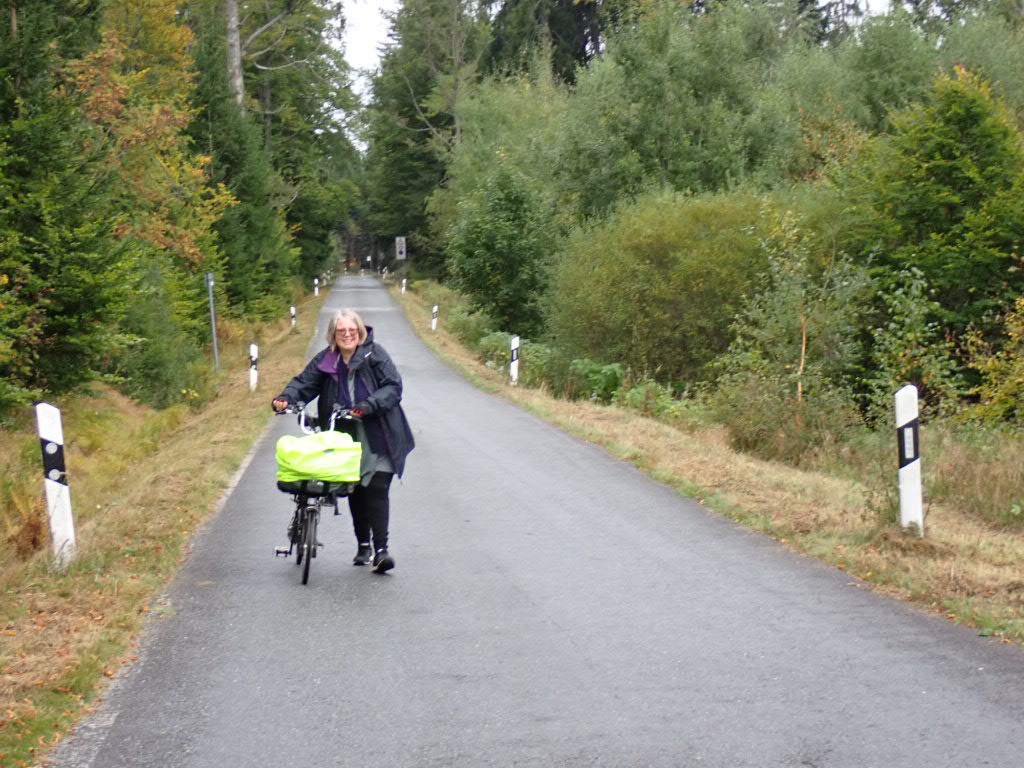
After an hour bus ride to Freyung, the ‘only way is up’ from now on – over 1000m climbed on our little Brompton fold-up bikes – the biggest amount of climbing we have ever done in a day ever. A very long slow climb. But I have probably walked for longer than I have cycled today as the air got thin and cold as we climbed and Rob was very patient as I puffed along behind.
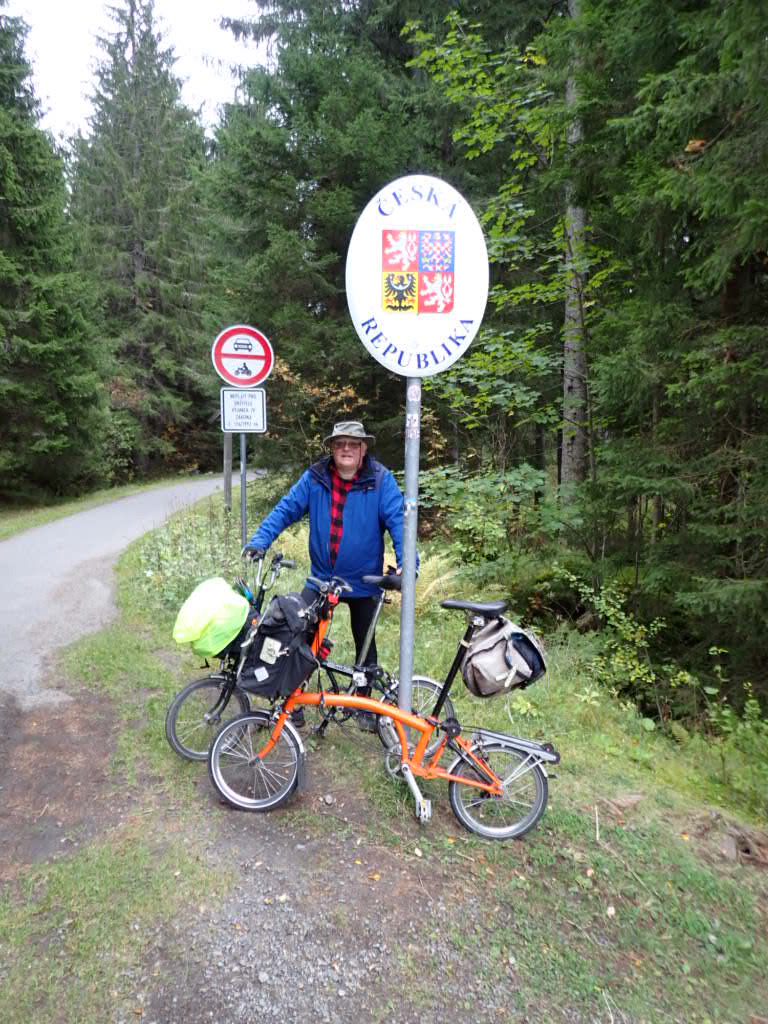
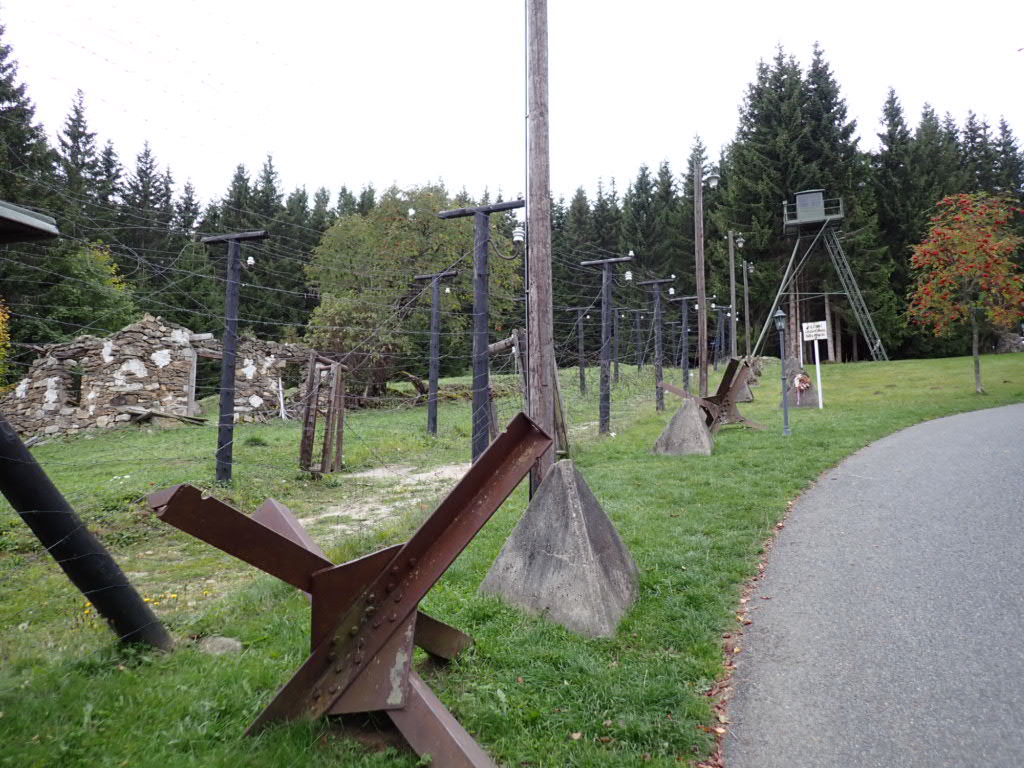
Eventually we came to the border with the Czech Republic, leaving Germany behind. This part of the world was so different when an iron curtain ‘descended across Europe’ with all the fortifications to keep citizens in the East and then an exclusion zone with peope removed from their homes. Some of this is there to see, with out any personnel at all. In fact we hardly saw anyone for miles except several buses that we could have used to miss out on all the fun climbing.
And then to search in the middle of seemingly nowhere at all, for the source of the Vltava. Did we find it? Or do we have to go back the next day cycling uphill for 7km so we don’t miss this essential bit? But despite leaving earlier than planned, Claire is going at such a slow pace and there is so, sooooo much climbing, time is ticking on, it’s misty and the rain is turning into more than a ‘wee smirr’. We have rain covers over the luggage, coats on and lights on the back of the bikes. Turn up to see the next exciting installment tomorrow (or straight after this if reading this on or after September 30th 2025)
How do you cope when you achieved your lifetime ambition in 1996? After John O’Groats to Land’s End it took a while of perusing to settle on the next goal. Cycling aroung the Isle of Wight in the ice at New Year just didn’t hit the spot. Plans to cycle the River Thames from the source to the mouth came to nothing as did cycling Denmark from north to south. My companion for cycling the length of mainland Britain was now married as was I and these very personal dreams now were part of a different shared vision.
So Rob entered the scene. Marrying when I was 35 was a sign of how long it took me to find my own bike mechanic, route planner, provider of discounted rail travel, and professional photographer. Add to that an interest in all things Czech and a long history of trying to learn the language, and seeds were sown for my next plans.
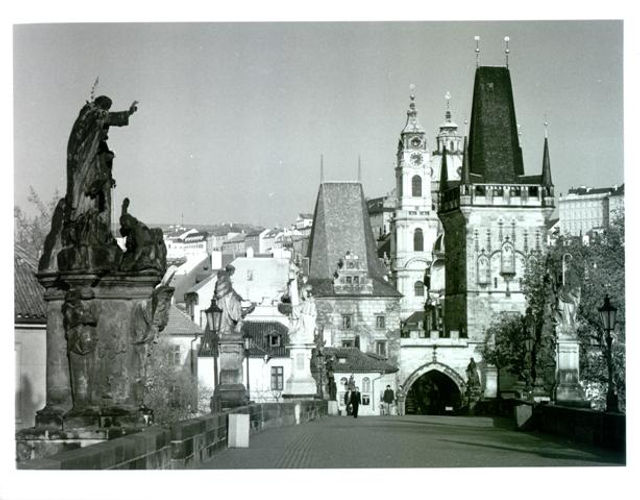
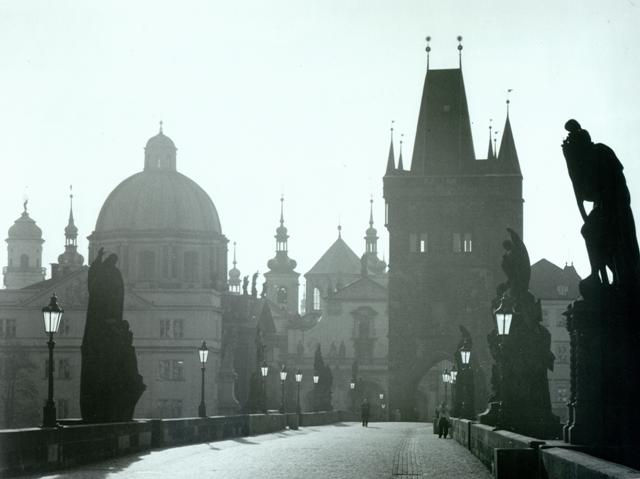
I had grown up with Smetana’s music. Mum and Dad owned a box set of ‘Ma Vlast’ (‘My Fatherland’) by Smetana. I loved putting on this record – so melodic with its themes inspired by folk songs. Our honeymoon (some of Rob’s photos of Prague below) included a trip to Prague where it had not dawned on me that the river under the iconic Charles Bridge was the very same Vltava of the record A bit ignorant I know but a childhood of traipsing round Europe with a father who worked for the railway too, had not included a trip to Czechoslovakia, as it was then – we got further east but stayed west of the Iron Curtain, in Vienna.
So a plan was hatched – to follow the River Vltava from source to the mouth, studying the music along the way and enjoying the photography and Czech culture . . . except it really wasn’t that easy. Autumn 2003 was allocated for departure months in advance, the guide book purchased and Rob had carte blanche to peruse Thomas Cook’s Continental Rail Timetable for hours – and then I learnt that against many, many odds, a baby was on the way. Feeling like you are going to throw up at any moment, especially when drinking anything, was not compatable with plans to cycle a considerable distance every day so it all changed to ‘just’ a trip to some nice places in the Republic.
Roll on to 2025 when all the necessary elements finally combined. Patience is so not any of my names and 22 years was a long time to wait. Now we have the money (mainly courtesy of an uninsured driver on drugs hitting Rob and a wait of 3 years to get some very welcome, but probably not enough, compensation). We are also now ’empty nesters’- that horrible term when your children have left home, but then suddenly return now and then, slightly changing each time and becoming more and more their own person, and consuming more milk than you ever remember.
But September 29th, our planned departure date, has been made more memorable already by the arrival of our first grandchild. This did not derail plans as, born in Malta, the last thing Beth and Andrew need is us descending on them for a while. We will go later in the year. But our plans have had to be curtailed. This will be ‘Vltava – from the source to half-way’ – part one, with part two to be completed in less than another 22 years. Our daughter is having a long awaited op and I cannot in all conscience be out of the country when she comes out of hospital – so home we go on the 6th. That might be a blessing as luggage on a Brompton bike is necessarily so limited and my medications, lotions and potions for a now 60 year-old post-menopausal woman takes up nearly all of it.